Your Custom Text Here
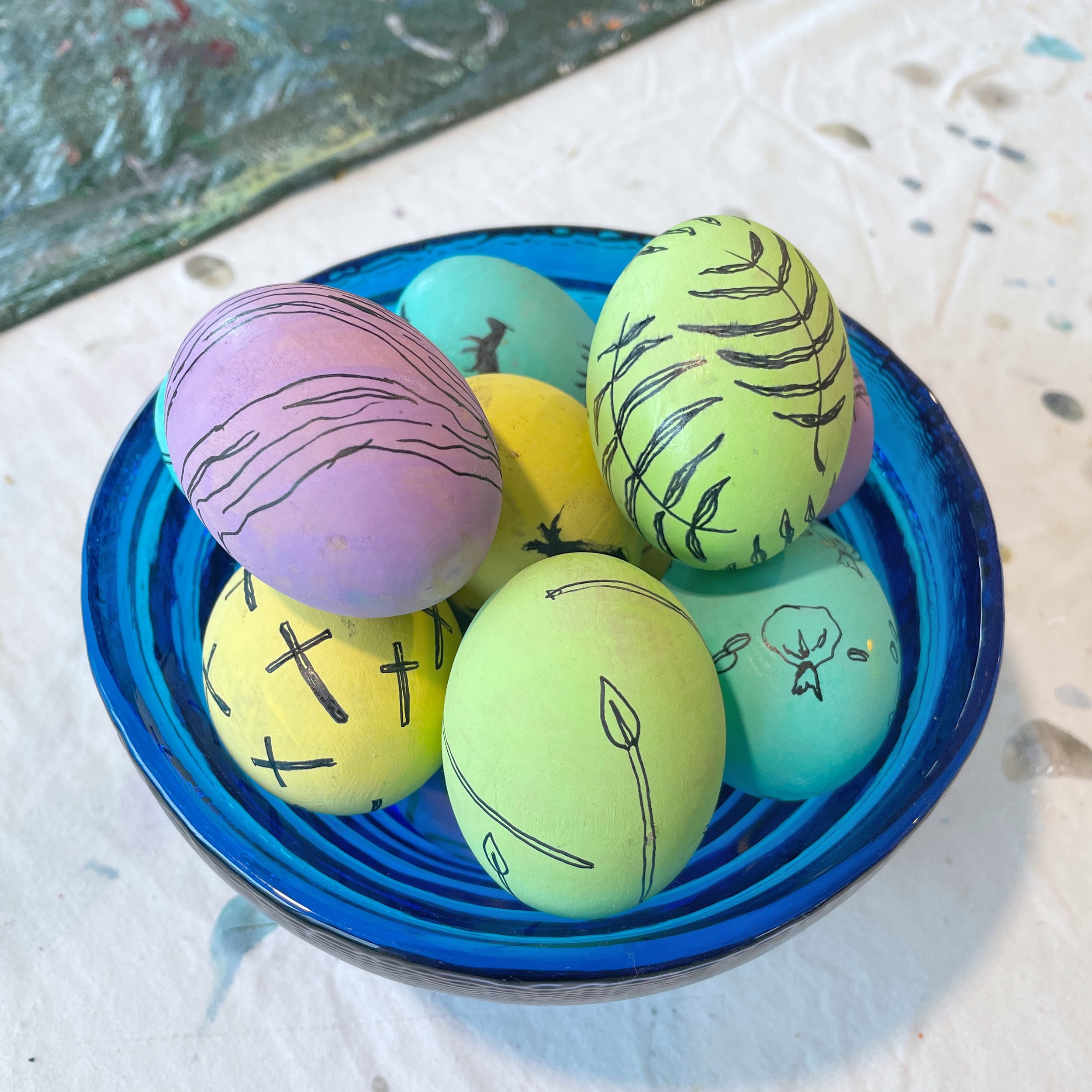
How to Create Your Own Easter Story Eggs
We love many Christmas traditions, but my family was having a hard time finding a meaningful Easter tradition. My sister-in-law found this idea and we’ve made it our own. I would love to share with you our new tradition of story eggs.
We love many Christmas traditions, but my family was having a hard time finding a meaningful Easter tradition. My sister-in-law found this idea and we’ve made it our own. My studio is usually full of abstract art and my current projects, but it was a wonderful break to create theses as a family. I would love to share with you our new tradition: Resurrection Day eggs.
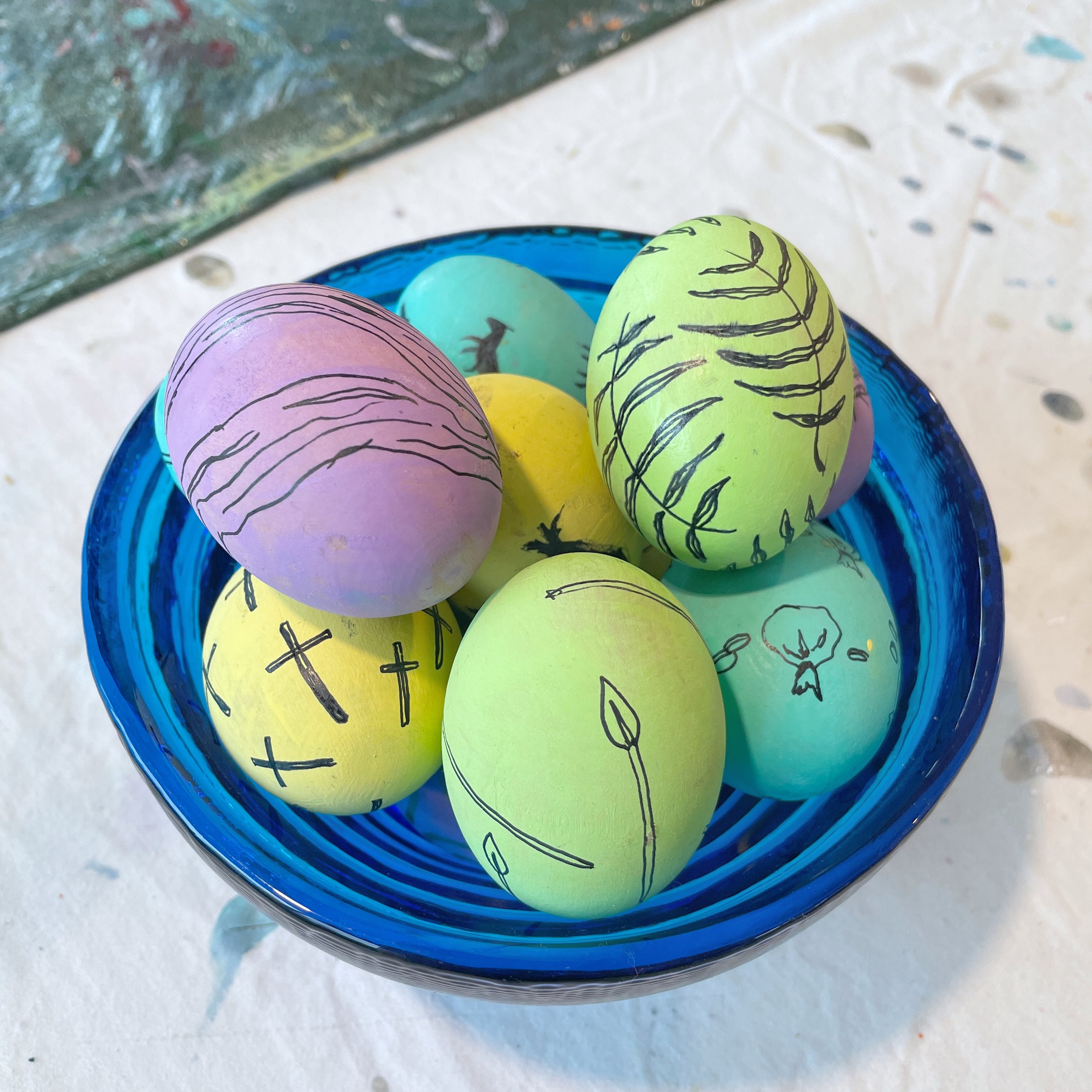
Each one of the twelve eggs shows a symbol that relates to the week leading up to Jesus’ death and resurrection. My girls had a great time painting these and each year we bring them out and tell the Easter story.


Here is how you can make your own Easter story eggs:
Supplies:
Craft paint ( 3-4 colors of your choice, we used pastels)
Gold paint or gold paint pen to create God’s glory egg
12 Wooden eggs (like these!)
Paint brushes
Water cup
Fine-tip permanent marker
Varnish or spray sealer
Paint each egg with two coats of craft paint, allowing drying time between each coat. The wood absorbs the paint fairly quickly. The kids helped me with this step.
Drawn on the symbols on each egg with the permanent marker. You can do an overall design or one large symbol on each, whatever you like better. I ended up drawing the symbols on ours. Don’t worry if you are not an artist. Use simple shapes. The main point is the meaning behind it. Diagram below!

Top to Bottom, left to right:
tomb, communion cup and bread, bag of silver and pieces, spear,
burial cloth, nails, rooster, thorns
cross, God’s glory, palm branches, donkey
3. Seal your eggs with varnish or spray sealer as the marker will wear off over time. I learned this from personal experience!
Once you have created your eggs, you can use them however your family wants. We bring the eggs out at the start of Lent as a reminder of what is to come. During the week leading up to Easter, you can hide one to two eggs per day and read the corresponding scripture. I’ve written the document here with the symbol, meaning, and scripture in the order of the biblical events. You can also hide them all on Easter Sunday around the house and have the children find them and read and share the story at your family meal, each person sharing their piece of the story with the egg that they found. Help little ones learn the story by asking what symbol is on their egg and if they remember how it relates to the Easter story.
I have friends who have given a box of story eggs to each one of their children. Their eggs are a different color so each child can identify their own when they hide them. This could become a treasured keepsake to pass on. Take this idea and make it your own!
Happy Easter! He is Risen!
Download the Easter story eggs resource here. (Thank you to good family friends who complied this and I adapted for this Resurrection Egg version.)

Best Books of 2023
Here are my favorite books of 2023!
I love to read! When I had two little toddlers running around I was a TIRED WOMAN and my zombie-like sleep patterns didn’t allow for much reading. But now I’ve carved out time for reading and it has made such a difference. I’ll write another blog post all about how to find out how you like to read but for now, let’s dive into the books, shall we?
This list is very eclectic and reflects my reading style. I tend to read lots of contemporary fiction novels on my Kindle before bed with a variety of non-fiction books added in. Here are my ten favorites of the year in no particular order. Note: These are not all books published in 2023 but ones I read in the Year of Our Lord 2023.
I’ve also organized the rest of the 40 books into categories with brief descriptions so you can see if they make your “To Be Read” list:

This is the first book I read of 2023 as I received it for Christmas. I absolutely loved the aspiring and beautiful pictures. Benzakein takes you through step by step how to grow, harvest and design with cut flowers season by season.
While I still have yet to grow a dahlia (my seedlings last summer wilted 🙁) this book encourages me to keep going and gives me the advice I need. If only to look at the beautiful flower photography to get through the bleak winter, this book is worth it. And I will grow a Dahlia this summer. It’s going to happen!

I walked through this book with a friend and I am not exaggerating when I say that this book changed my life. Fugimura is a professional artist and reflects on the topic of creating, especially as an expression of bringing in the New, which is to say bringing in God’s kingdom.
He writes, “Through the fissures of our broken journeys, with pieces of our own hearts shattered on the ground, we journey by God’s grace into the New Creation. God sees beyond our shattered remains. He picks them up and sings a song over us.”
This book helped me to see myself as a maker and my purpose as an artist and also inspired my newest collection, Earth to Eden. Read if you are an artist who needs to be reminded of the significance of beauty and art in the church.

I couldn’t put this one down! I read it in a couple of days. The author, TJ Newman is a flight attendant herself and this book is set on a crashing airplane. That is how the story starts - the airplane the characters are on is crashing!
It is an intense ride full of problem solving, disasters, miracles, and heart. I love stories that center around family and this has a good one.

I still think about the creativity of this book long after I read it back in the spring. I’ve been getting into climate books lately and I never thought I would. It is a similar genre to apocalyptic fiction, which is maybe why I like it. The world is no longer as it was and characters must adapt.
Florida is slipping away. As devastating weather patterns and rising sea levels gradually wreak havoc on the state’s infrastructure, a powerful hurricane approaches a small town on the southeastern coast. A family must survive.
As Florida continues to unravel, Wanda, the daughter born in the hurricane grows up. This is a beautiful journey of Wanda as she experiences loss, gains community and seeks adventure.
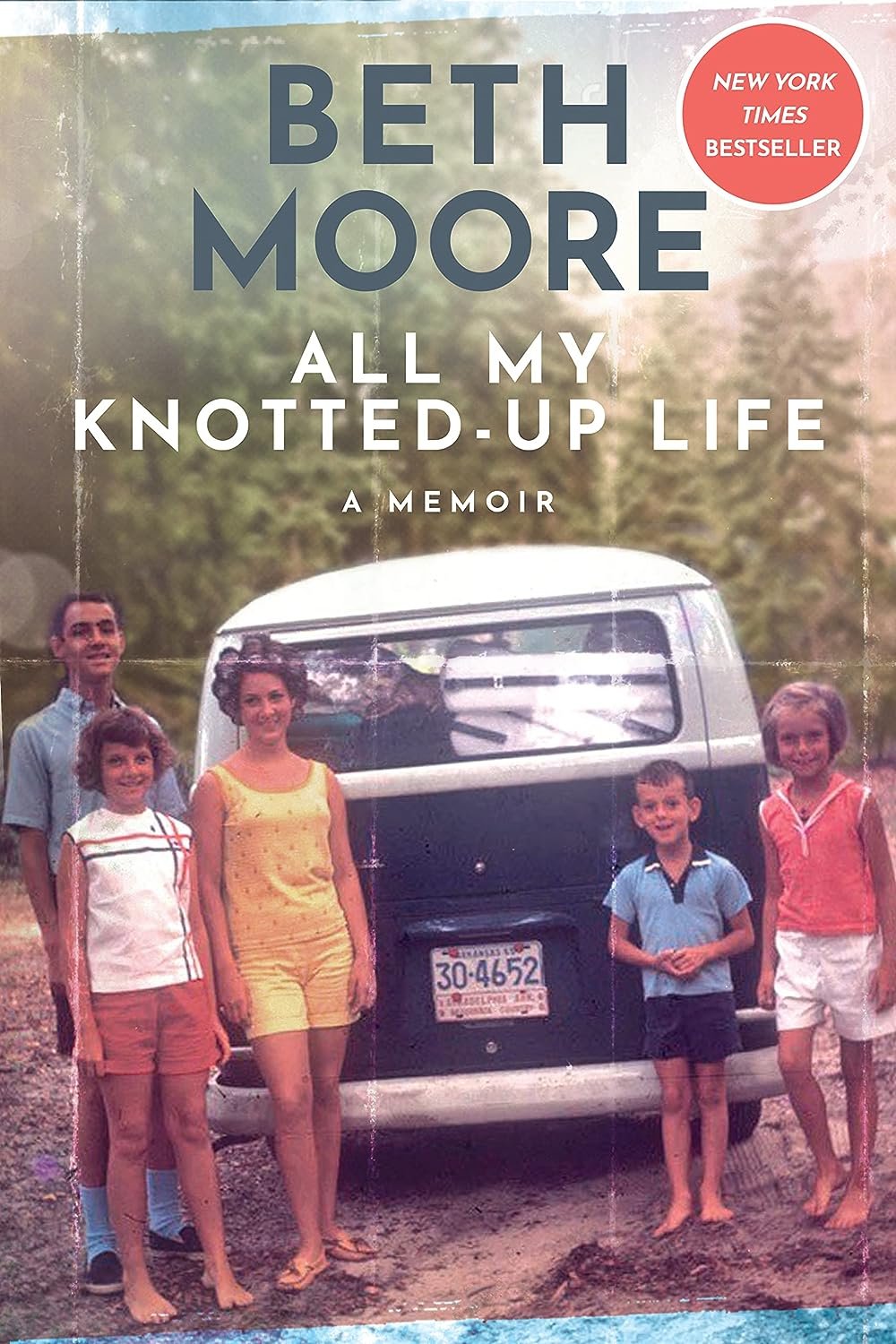
5. All My Knotted Up Life by Beth Moore
This memoir is acclaimed and for good reason. Beth Moore is gracious in her telling of her past and the abuse suffered in the Southern Baptist denomination, but that is not all this book is about. It covers those topics but this is not a tell-all, finger-wagging assault.
It is a beautiful picture of God’s grace over Moore’s life. She sees that grace and knows it deeply and points others to it. I was initially concerned about reading this, as I knew it had sensitive content, but she handled it with such care. Must read!
6. Adorning the Dark by Andrew Peterson
I read this one after Art + Making and I describe it as a craft book for Christian creatives. Goodreads says, ‘While there are many books about writing, none deal first-hand with the intersection of songwriting, storytelling, and vocation, along with nuts-and-bolts exploration of the great mystery of creativity.” I appreciated how this book discussed community and how artists work together and create beauty. It was special for me to see this played out as it has been a desire of mine in the Lexington, KY area. The book helped move my thoughts along to creating a creative community called, River of Willows. Books churn ideas, shape our thinking and God uses those new thoughts to do His Will. The book was an example of that in the launch of River of Willows community this past spring. I’m grateful for the journey this book took me on.


7. We Are the Brennans by Tracey Lange
As you’ll see below, I love a book centered around family. I read lots of them last year! I enjoy seeing the dynamics of each character and how they interact with one another. I particularly loved We Are the Brennans by Tracey Lange. (Her other book, The Connellys of County Down is great too!)
Focused on an Irish family and the pressure to save their family bar, the story goes deeper as it explores the power of love and shame. The writing is lovely and familiar as it makes you feel like part of the story with its depth of detail and intimacy of character. Maybe this made me feel nostalgic about my own big Irish family, but the characters and ending satisfies.
8. The Dutch House by Ann Patchett
How did I not know about Ann Patchett until this year?! I listened to this one on audio (narrated by Tom Hanks!) while painting and this book felt like a beautiful layered oil painting. The characters and plot mix together into a thoughtful composition. The story is told by Danny, as he and his older sister, Maeve, are exiled from the house where they grew up by their stepmother. This story weaves deep relationships and the longing for the past to produce a rich story about two siblings who are only truly comfortable when they’re together.


9. Winter Garden by Kristin Hannah
I love a good historical novel by Kristin Hannah (The Nightingale, anyone?) The Winter Garden was eye-opening for me as part of its story is set in WWII Leningrad. I did not learn the bleak history of this place until researching it after reading this book.
Two very different sisters come home to their family’s California orchard to help care for their ill father. Their cold mother, Anya, offers no support. Slowly begins an unexpected journey into the truth of Anya's life in war-torn Leningrad, more than five decades ago. Finally, the daughters hear the harrowing tale of their mother’s life and the secrets of the past.
Again, I love a family novel, especially one with healing and redemption which this one does.
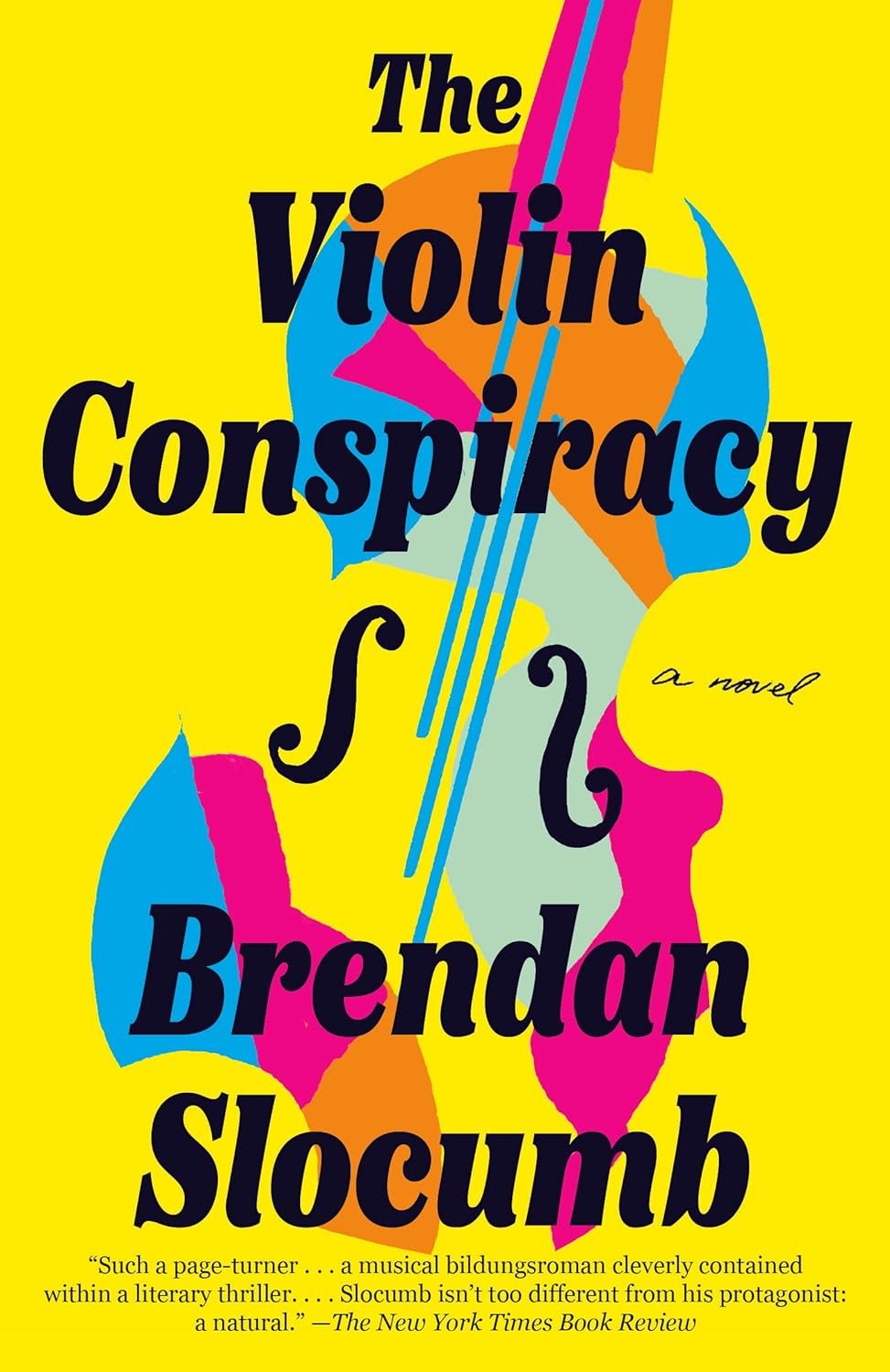
The Violin Conspiracy by Brendan Slocumb
I listened to this one on audio and I am so glad I did as the narrator’s voice is a wonderful addition to the story.
I appreciated the success story of Ray McMillian, a brilliant violinist who must face obstacles of family, race, and finances to pursue his dream of becoming a professional musician. Then the story gets even more intriguing when he finds out his great-grandfather’s violin is a priceless Stradivarius. Highjinks ensue and pressure rises until the very end. You root for this character all the way through this book.
Here are the other 40 I read as well sectioned into categories:
Young Adult
11. The Firekeeper’s Daughter by Angeline Boulley - A thrilling coming-of-age story blending Ojibwe culture, a complex crime investigation, and a deep dive into community secrets. Loved this one!
12. Warrior Girl Unearthed by Angeline Boulley: sequel to Firekeeper’s daughter, involving the same community by focusing on the next generation. I enjoyed The Firekeeper’s Daughter more but this one opened my eyes to the cultural abuse and misappropriation of Native American artifacts and history which was meaningful.
Nonfiction
13. Healing Through Creativity by Fiona Horrobin: A guide exploring the therapeutic power of creative expression in healing emotional and psychological wounds. Jesus + creativity = healing
14. Praying like Monks, Living like Fools by Tyler Stanton: I read this for a summer Bible study and it was a thought-provoking exploration of how to pray in today’s chaotic modern life. Practical information I still use today!
15. The Ruthless Elimination of Hurry by John Mark Comer: This one had my little enneagram one heart at hello. A call to embrace slower living, emphasizing the importance of rest and mindfulness in our fast-paced world.
Poetry
16. I Hope This Finds You Well by Kate Baer: A collection of thought-provoking poems. Baer uses the unsolicited opinions and comments from her blog to reclaim and reshape into poems. Brilliant concept!
Family Narratives
17. Instructions for a Heatwave by Maggie O’Farrell: A captivating family drama unfolds during the scorching summer of 1976, revealing long-held secrets and family dynamics.
18. The Connellys of County Down by Tracey Lange: A family drama that explores sibling connection and what we would do for family.
19. Malibu Rising by Taylor Jenkins Reid: The story of four famous siblings throwing an epic party that turns their lives upside down, set against the backdrop of Malibu in the 1980s. No one does modern historical settings like Reid. The 80s rings true.
20. Tom Lake by Ann Patchett: A mother tells the story of her summer at Tom Lake, a theater community, to her three adult daughters when they return home because of the pandemic.
21. One in a Million Boy by Monica Wood: A heartwarming tale of an unusual friendship between a 104-year-old woman and a boy and later his father.
22. Pineapple Street by Jenny Jackson: A novel about a rich New York family that delves into secrets and complexities of love and societal expectations.
Fiction/Literary Fiction
23. Carrie Soto is Back by Taylor Jenkins Reid: A legendary tennis player comes out of retirement to defend her record, facing personal and professional challenges.23. Our Missing Hearts by Celeste Ng: A powerful narrative about the enduring strength of parental love in a dystopian society that suppresses cultural expression and personal freedoms.
24. The Lost Vintage by Ann Mae: A story of family secrets and a mysterious wine collection, bridging the past and present in the vineyards of Burgundy.
25. Now Is Not the Time to Panic by Kevin Wilson: A novel about the chaos and creativity of adolescence, centered around a mysterious and controversial piece of art.
26. Fall of Marigolds by Susan Meissen: A historical novel intertwining the lives of two women, connected by a scarf and separated by a century, finding love and hope in times of tragedy.
27. Nothing to See Here by Kevin Wilson: An imaginative and funny tale about a woman tasked with caring for two children with a unique and dangerous ability to spontaneously combust.
28. We Are All Completely Beside Ourselves by Karen Joy Fowler: A unique and thought-provoking story about a young woman grappling with the truth about her unconventional family upbringing. Can’t say I like the twist that this book provided.
Lifestyle
29. The Cook’s Book by Bri McKoy: A delightful combination of practical recipes and personal anecdotes, emphasizing the joy and community found in cooking and sharing meals.
30. The Minimalist Home by Joshua Becker: A guide to decluttering and simplifying your living space, promoting a more focused and fulfilling lifestyle.
Thriller/Suspense/Murder Mystery
31. The Silent Patient by Alex Michaelides: A gripping psychological thriller about a woman's sudden silence following a violent act and the therapist obsessed with uncovering her motive.
32. Wrong Place Wrong Time by Gillian McAllister: A suspenseful story about a mother saving her son from a poor decision, she is forced to go back in time to find the key to the mystery.
33. Yellowface by R.F Kuang: A critical exploration of cultural appropriation and identity in the literary world, challenging readers to reconsider notions of authenticity and representation. Lots of people like this one. I don’t appreciate narratives set up on a lie.
34. The Golden Spoon by Jessa Maxwell: Great British Baking Show + murder mystery
35. Girls and Their Horses by Eliza Jane Brazier: a murder mystery set on the dark side of horse riding culture
36. Lovely Girls by Margot Hunt: A thriller based on high school girls and their relationships with their mothers. If Mean Girls was a thriller instead of a comedy.
37. Killers of a Certain Age by Deanna Raybourn: Aging female assassins must confront their past as they become targets themselves. Think Geriatric Charlie’s Angels.
38. The Last Flight by Julie Clark: Two women desperate to escape their lives swap plane tickets, leading to suspenseful twists when one of the planes crashes.
39. Good as Gone by Amy Gentry: A gripping story about a kidnapped daughter who returns home, sparking questions about her true identity.
41. Counterfeit by Kirsten Chen: A tale of two Asian American women drawn into the world of counterfeit luxury handbags.
Romance (but literary, not steamy)
42. The Museum of Ordinary People by Mike Gayle: A heartwarming story celebrating the beauty and significance of everyday objects and memories.
43. Talking at Night by Claire Daverly: An exploration of deep conversations between two acquaintances in high school that unfold into a long-lasting relationship.
Science Fiction
44. The Road to Roswell by Connie Willis: A band of characters help a lost alien find its home. This book was a thumbs up on summer reading lists I subscribe to and I gave it a shot, but it was the worst book I’ve read all year. The premise didn’t hold up and it was just plain stupid.
45. Upgrade by Blake Crouch: A man genetically modified with extraordinary abilities faces moral dilemmas in a future where gene editing is possible.
46. Dark Matter by Blake Crouch: A mind-bending thriller about a physicist who confronts alternate versions of his life in a multiverse.
Autobiography/Memoir
47. Year of Yes by Shonda Rhimes: (listened on audio) Shonda Rhimes shares her transformative experience of saying 'yes' to opportunities for a year.
48. Yes, Please by Amy Poehler: (listened on audio) A humorous and insightful memoir from comedian Amy Poehler, reflecting on career, life, and motherhood.
49. A Very Punchable Face by Colin Jost: A candid and witty memoir by comedian Colin Jost, sharing personal stories from his life and career on SNL.
50. Becoming Free Indeed by Jinger Dugger Vuolo: Jinger Dugger Vuolo recounts her journey from a strict, conservative upbringing to finding her own path and beliefs. I liked this as she disentangled her faith from circumstances and did not just completely give it up. I read it after watching the Shiny Happy People documentary.
All thoughts and opinions are my own and I was not paid or incentivized in anyway for this content.
Sharing the Process of Creating the Earth to Eden Abstract Landscape Collection
I explain the process and the thought behind painting the Earth to Eden painting collection.
With many of my collections, I start first with writing and reading. Earth to Eden is no different. Thoughts from Makoto Fujimura’s book Art + Faith kept percolating to the surface:
“Through the fissures of our broken journeys, with pieces of our own hearts shattered on the ground, we journey by God’s grace into the New Creation. God sees beyond our shattered remains. He picks them up and sings a song over us.”

In the Midst, 48 x 24 inches
The Earth to Eden collection shows the moments of reconciliation of a world back to its Creator. Colors swirl and paint drips, caught where the viewer is invited into the very moment where the reconciliation is occurring. This is when darkness fades and new light is revealed. Some paintings show the fading darkness - the turmoil of transformation such as battling waves and stormy skies, while others result in a colorful landscape fully unfurling God’s glory. Large skies show the swirling of the spiritual and the physical - the reckoning of creation back from the grips of the curse.
One of my favorite paintings of the collection is In The Midst, a marsh scene full of stormy sky. It was inspired by Jesus calming the storm. Surely the disciples were terrified, but in that very moment, there was His peace with the storm.
The two were together for a brief moment, inviting the disciples to step into faith and believe this Messiah would take care of them. In the painting, the land has light and darks; the sky wrestles with faith and doubt. I tend to feel like this daily in some aspects, to doubt and to believe, to pray expectantly, and to pray out of routine. This painting, to me, speaks to what it is to be human.
The human aspect in the act of painting was important to me as well. I wanted to make sure the brush strokes were not feathered and smoothed out so the viewer could see the human hand that created them. I also wanted to make sure to keep the dripping paint layers as part of the final paintings. Normally, you might think to cover those layers up, but to me, they express the movement of the kingdom. The drips physically moved down the canvas and pooled into lines on their own, forming layers of the painting. The drips also represent a sense of freedom for me and shatter my old ways of perfectionism.
The themes of God’s kingdom breaking into our broken world are a constant in this collection. The main question is: What does it look like to have hope in times of suffering and despair? In other words, to know pain and suffering, but to also know the hope on the other side?
The collection poses the question: After all the world’s suffering, what would it look like to be transformed into the hope of Eden?
To me, it is tangible and intangible. It is ephemeral and it is steadfast. It feels like knowing and unknowing. This kind of hope is not understood by many. It is faith in things unseen, a knowing that a good God interacts with His creation in deep and suffering ways to understand us and the wounds of humankind.
When you first look at this bright colorful collection, it might seem like a strange juxtaposition to discuss suffering, but we must first start with suffering to understand hope. God continues to move in His world. Suffering is here, but it isn’t the end of the story. It is the beginning of growth, love and breakthrough. This collection, Earth to Eden, visualizes that moment of breakthrough of light in the darkness.

close-up detail of New Light, 18 x 24 inches
Light was a major theme in each of the paintings, particularly the ones with large skies. Most have multiple areas of light. One of the first rules as a painter is to find your light source, but with these abstractions of landscape and the physical reality and its laws, I wanted to play with light coming in from multiple angles - the Light of the World refracting and reflecting into multiple layers for the reconciliation process.

Bringing in the New, 36 x 36 inches
2 Corinthians 5:16 - 18a says, “This means that anyone who belongs to Christ has become a new creation. The old life is gone; a new life has begun! And all of this is a gift from God, who brought us back to himself through Christ. And God has given us this task of reconciling people to him. For God was in Christ, reconciling the world to himself.”
As an artist and a Christ-follower, I long to be a part of the reconciliation in these times more than ever. The kingdom is now. It is coming and it has already come. Viewing it through the lens of final but not yet finished, helps bring life and hope to a weary world. Earth to Eden is a collection of that tangible yet intangible presence of God and his Kingdom and the effects of His glory on creation. It visualizes the longing in my own life to bring in the Kingdom, one sliver of light at a time, to bring beauty and goodness into a world that desperately needs it, and to throw off the old things resulting from brokenness.
All of the paintings are what I call, spiritual landscapes. They combine the physical elements of water, land, and sky with spiritual realities like creativity, hope, and joy. Earth to Eden invites the viewer to take in a moment of transformation where the kingdom breaks through.
With each collection, I take a moment to write a poem that encapsulates what I am feeling and thinking about as I paint it. Sometimes that is difficult ( I just wrote over 1,000 words about it!) But the distillation of poetry is what I love - big concepts and ideas into a small amount of words, similar to my painting process. Here is the companion poem with the Earth to Eden collection:
The Spirit Who Moves Us
Like a vapor, it permeates the whole source,
bits and pieces of knowing.
Interstellar, one place and time folded
on top of one another.
It mirrors and refracts the past and future.
Deep expanse and then a beam of light
pulls through the darkness
pulls through the universe
pulls through us.
We seek truth and beauty and mercy.
Hold it in your hands like slipping water -
You will find Him here.
We leave pieces of ourselves along the journey,
Things we no longer need
Things we no longer want to carry
Things that are no longer us
The pieces that remain are molded and shaped
given to others to become
something larger than ourselves,
bright shining gold
left to be poured and pulled into a new creation.
A Guide to Vacationing in Glacier National Park

My husband, Aaron, and I celebrated his graduation with a trip to Glacier National Park. This was 5 long years of working on a doctoral program. We supported each other, but it was hard! It was such a huge accomplishment to be done with all this school and sacrifice for our family, so we wanted to mark it and celebrate. We had an amazing time in Glacier and it is probably the most beautiful place I’ve ever been to! This post is chock full of all the things we did so pin it for later and add Glacier National Park, Montana on your travel list!
Where We Stayed
First, let me preface this post by saying that I’m not a camping type of girl. I LOVE being outside in nature and doing all sorts of outdoorsy things, but at the end of the day, I need a hot shower and a soft bed to sleep in. We also flew so taking a bunch of camping gear on the plane didn’t really make sense.
Here is where we stayed. The best part about it was that it was just 5 minutes from the West Entrance of Glacier. Score.
This VRBO was just what we needed, an efficiency to lay our heads down after a long day of hiking. (Heidi is a great host!) We were able to cook a few meals with no problem. It’s just right for two people.
Park Passes
You will need to get a park pass for entrance into Glacier National Park. I was stressed about this, but it really is no big deal, but make sure you print your passes before you go. Internet is spotty so you don’t want to have to rely on QR codes on your phone.
The pass to get in is free. Also, if you want to travel on the Going-to-the-Sun-Road which is a must-see, you’ll need to buy the $2 travel pass. The website is not the clearest, but just know you can print both of these passes out and they will check them each day you arrive at the park.
Be sure to also take the Glacier Visitor Guide they hand you at the entrance as it has maps and lots of good information about hikes and Going-to-the-Sun-Road highlights.
Bear Spray
It is highly recommended to carry bear spray by the National Park rangers. It will make you feel a little safer. (You can’t take bear spray on an airplane either as carry-on (duh!) or in checked baggage.) If you are flying, make your life easier and rent bear spray at the Kalispell Airport. They have an outdoor store that rents bear spray for around $30 a can. This price is very comparable to other places that rent it. After your trip, you can drop it off in the store’s secure box when you take your return flight home.
Rental Car
You REALLY need a vehicle in Glacier. Since we flew, a rental car was a must. The park is huge and you’ll want to be able to hop from trailheads to other sites around the park.
Our trip was near perfect minus canceled return flights due to weather and a rental car kerfuffle.
We went to Glacier in June 2021 during a rental car shortage. Due to COVID-19, a bunch of rental car companies sold off their fleets of cars because they weren’t being used and they were trying to staunch the money loss. Then everyone and their mother wanted to go on a real vacation again...enter rental car shortage.
We went to all the main websites of the big car rental companies and EVERY SINGLE CAR was booked in that area for the week we had planned. Aaron found a subsidiary company of Hertz and was thankfully able to make a reservation. My recommendation is to call the local car companies. (There are several in the Kalispell Airport.) Speak directly to an agent and they will be able to help you make a reservation or at least point you in the right direction.
Hertz accepted our reservation, but when we arrived at the counter, they did not accept anything but a credit card. We only have a debit card. I don’t ever want to have a credit card again. It changed our spending habits in ways I can’t explain but science tries to. (You can read more about why we don’t have a credit card here in our debt-free post.)
We tried everything, running my debit as credit, asking if I could read my dad’s credit card to them with him on the phone, etc. NO was the answer. Can we just stop a minute and think how ridiculous this is? We actually HAVE the money in our account and they could receive it immediately. Our debit card is tied to VISA and has the same protections as a credit card. Also, don’t take our reservation and send us a confirmation without letting us know then how to pay. They just put up a little sheet of paper at the kiosk saying they don’t take debit. It’s just stupid, people.
I did mention it was a kerfuffle, right?
Rental car rant over.
Thankfully, Alamo was the ONE rental car business in the airport that accepted debit cards and they also had a car available (miracle of miracles) but it wouldn’t be available for another three hours.
We had to wait a bit and take ubers to restaurants during that 3-hour wait, but in the end, we got a Nissan Rogue, the perfect sport vehicle for traveling through Glacier. And the new reservation was $300 less than with Hertz.
Weather/Clothes to Wear
We had great weather the week we went in late June. It only rained one day off and on. Prepare for large temperature swings - 70s and 80s during the peak of the day and 30-40s at night. We wore shorts most days and I wore a fleece on top. Layers are perfect since it can be cold when you start out in the morning, but very warm in the afternoon.
We brought extra layers, like rain jackets, and put them in the trunk of the car just in case we needed them. I changed in the car a few times depending on the weather. Hiking boots are a must and I also brought my Chacos to change into when we were down by lakes.
Lots of layers!
Hikes We Did
Rocky Point Trail
A short, easy trail around Lake McDonald

Bear spray hooks on your pack!

Lake McDonald
Lake McDonald Nature Trail
Because of the recent forest fires, this trail has open views of gorgeous Lake McDonald. But it also has a lot of brush. Bring bug spray! If you are looking for a hike without too much elevation to start out your day, this is it.

Sperry Chalet Trail
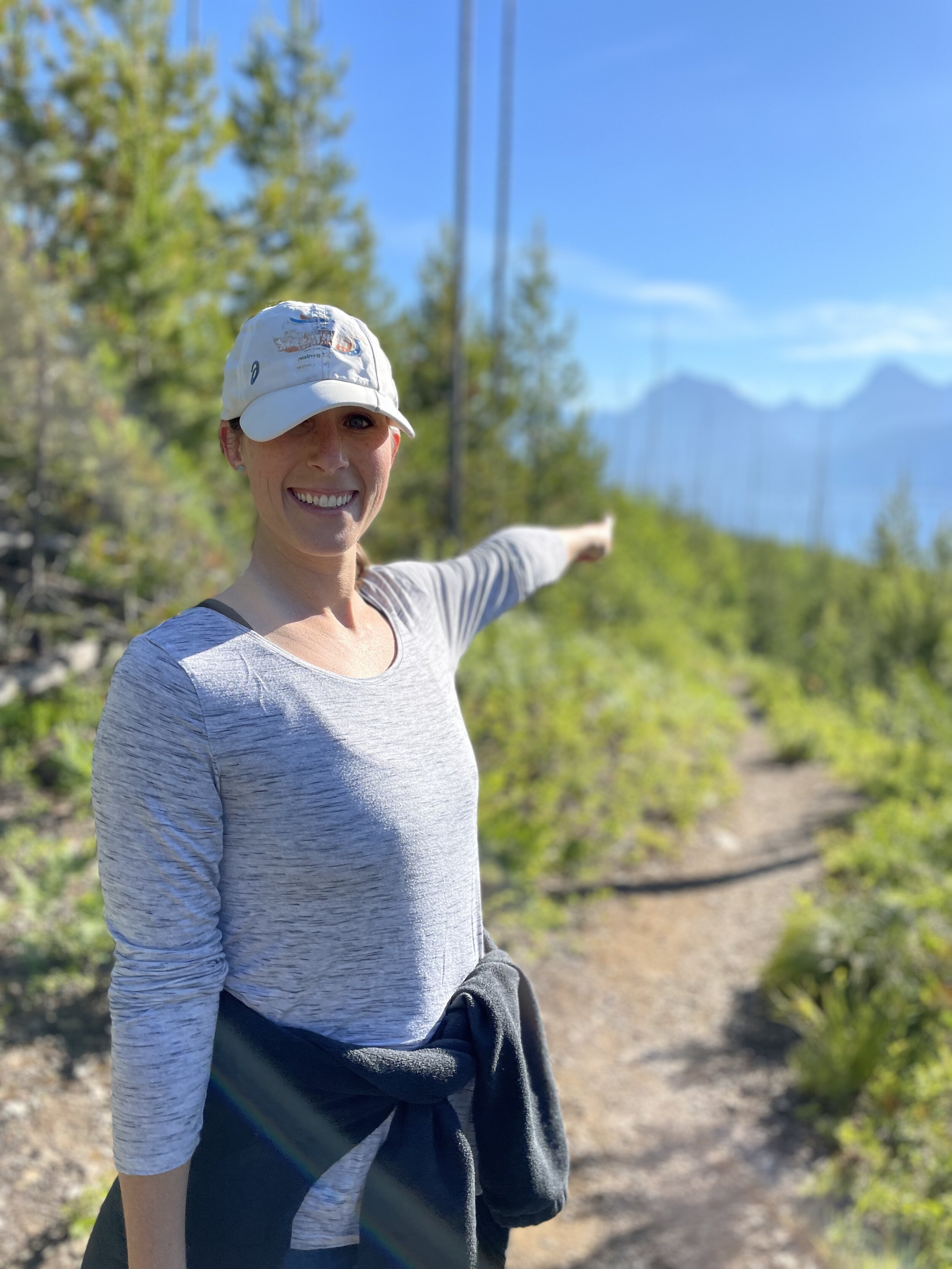
This trail is fairly steep and listed as a challenging hike. We did a part of this one and turned on to Mt. Brown Lookout. Sperry trail ends 6.3 miles with 3,500 ft. elevation at a chalet. Hikers can spend the night at and have a sack meal. (Must have a reservation.)
Mt. Brown Lookout
Oh my! You need to prepare for this one. We did this hike on a whim after Sperry Trail and didn’t know what we were up against - 5.1 miles long and the highest elevation climb of all the trails at 4,380 feet. The climb up is UPHILL (30 degree angle) the whole way. There are no flat areas and it is very steep. I had to take several breaks and it became a bit of a joke. We just kept laughing at how hard it was.

Super steep trail!
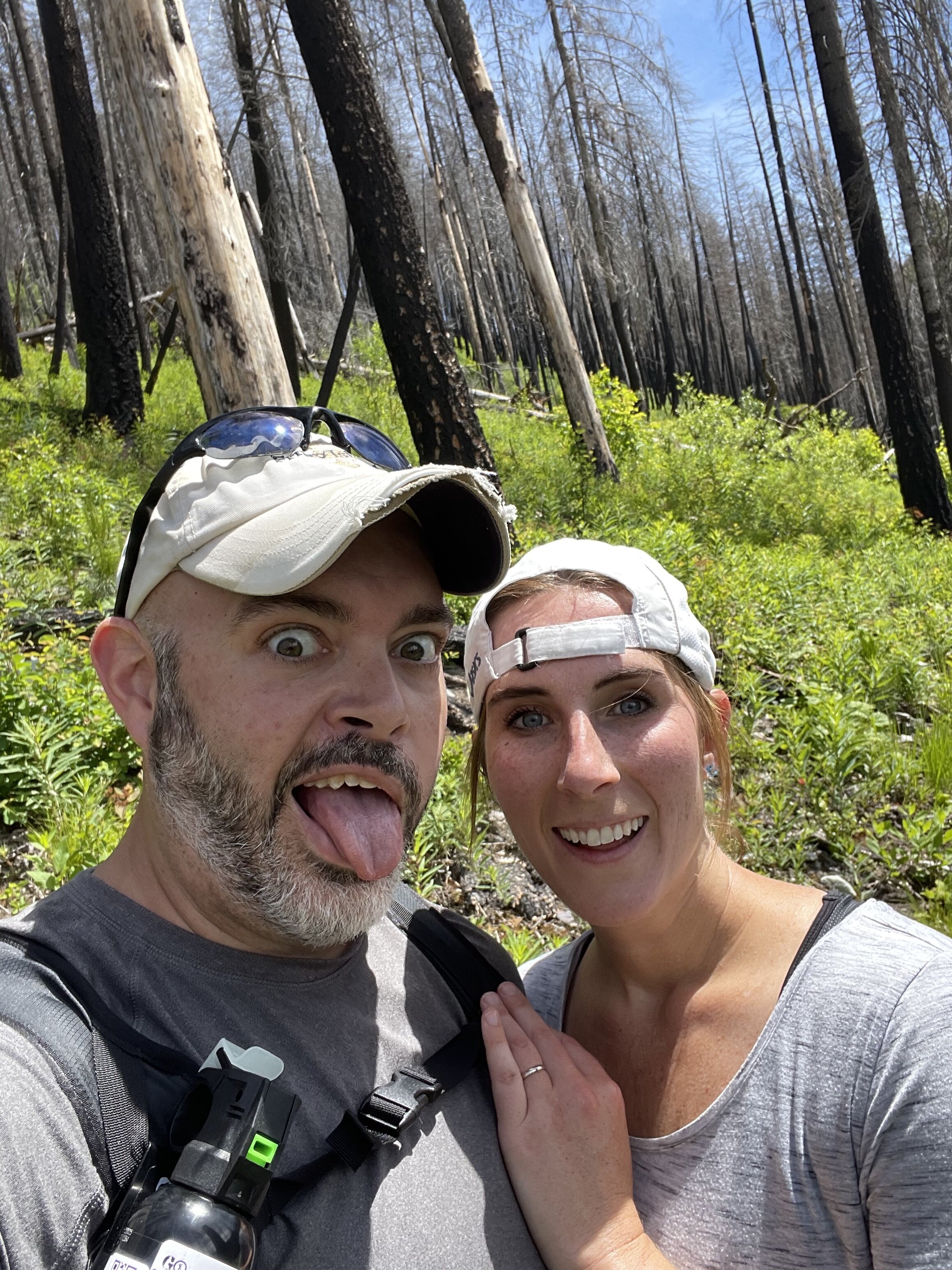
These are our tired faces!

One hiker said her friends climbed this trail the day before. At the top aggressive mountain goat ran them down the top of the mountain. We later saw a sign warning aggressive mountain goats. The advice was to yell and throw rocks at them. LOL!
We stopped about a mile from the top because it was late in the day and we didn’t have enough water. (If we had actually prepared, I think we would have made it.) We did see one giant 150 lb. goat about 5 ft from the trail who didn’t give a what. Thankfully he wasn’t aggressive.

We were not laughing when we had to hike another 5 miles downhill. Our legs were so sore! But the views were absolutely gorgeous and you are literally on top of a mountain looking out to smaller mountains and a placid lake. Beautiful!
Trail of the Cedars
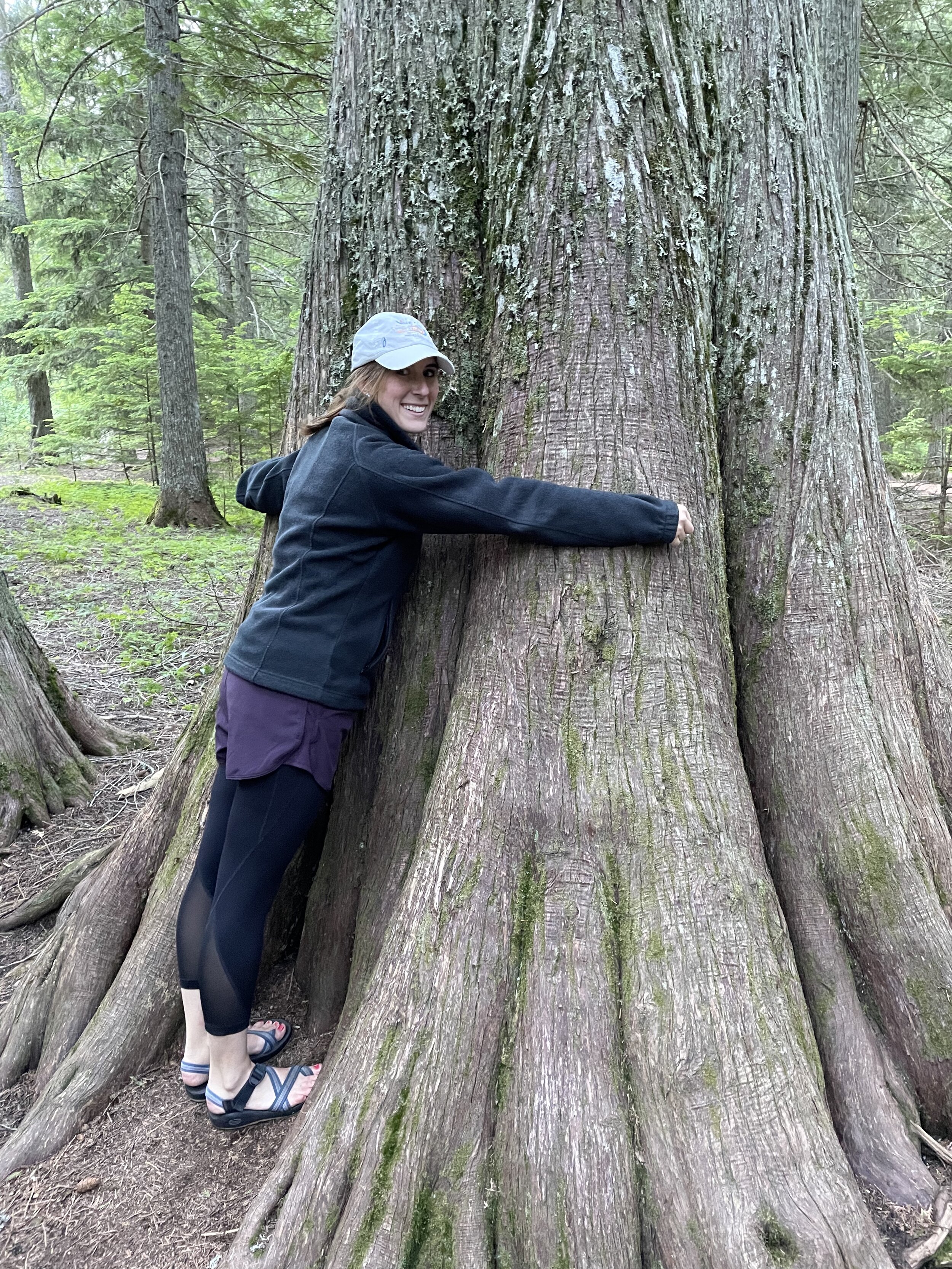
This was Aaron’s favorite trail. It is a very walkable (even handicapped accessible) 1.1-mile loop. You walk through an ancient cedar forest and the smell of the trees is incredible.
Go early as this is a popular spot with limited parking. You might have to drive around a few times to get a parking spot.
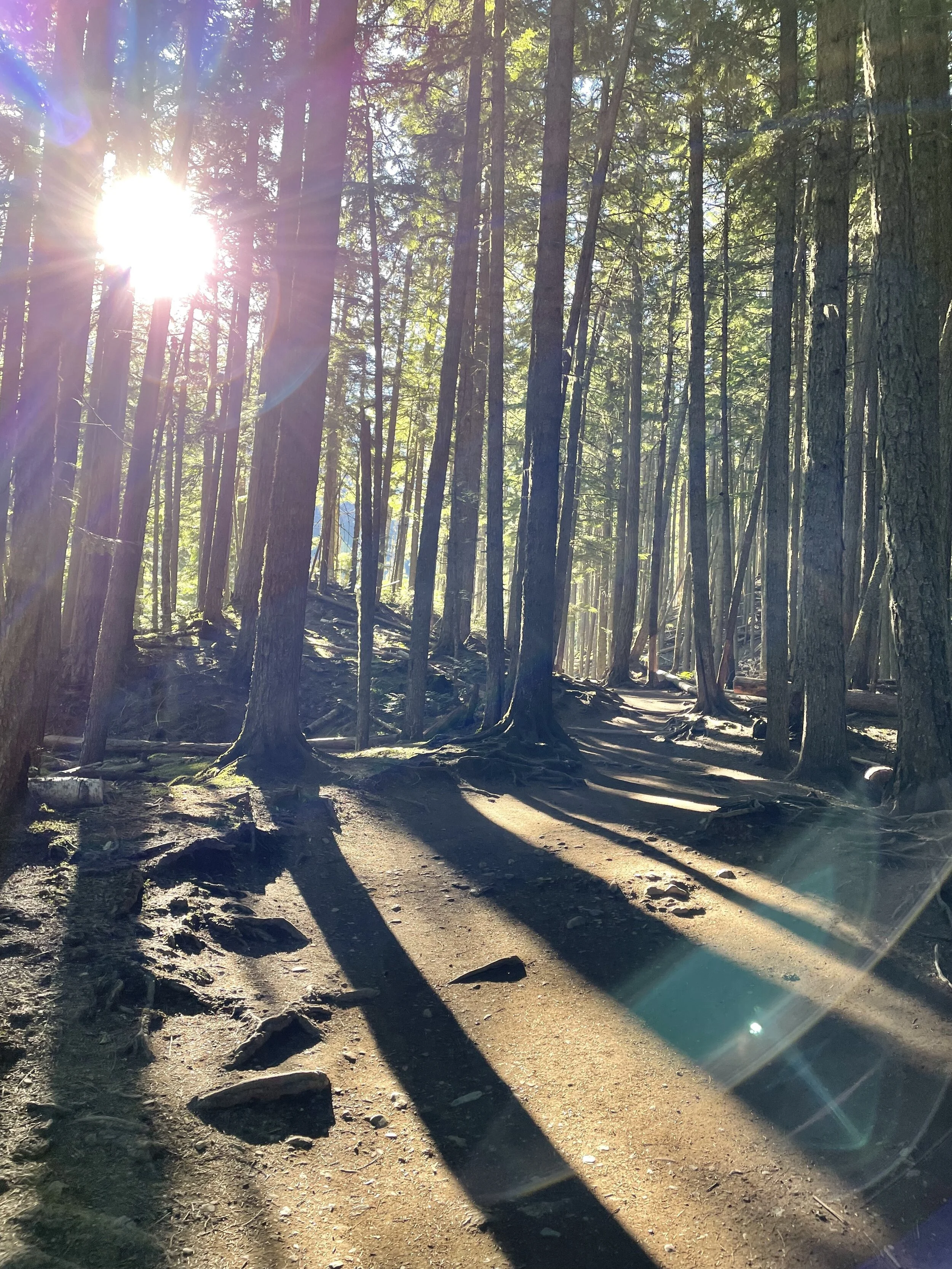

Avalanche Lake
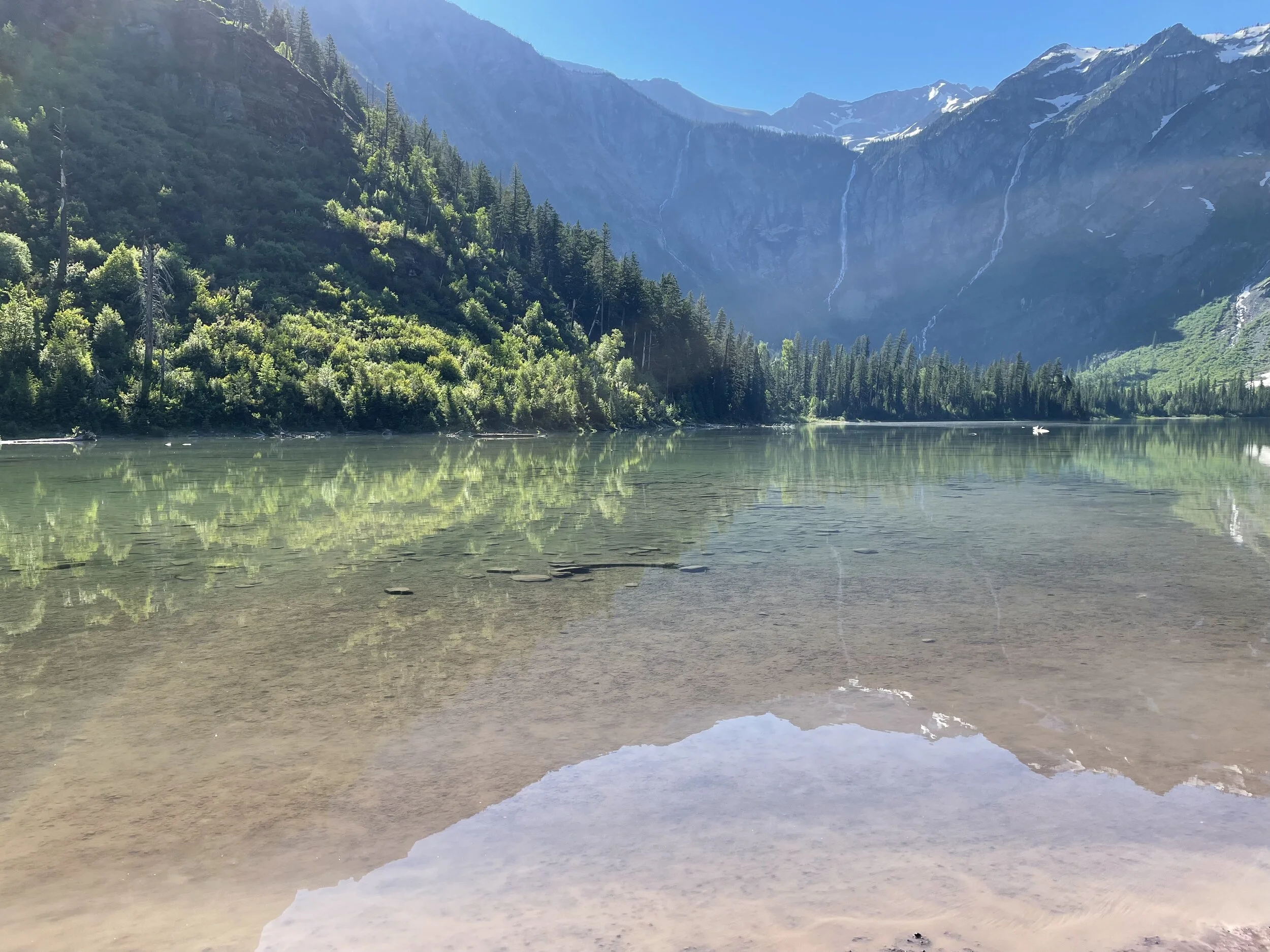
Trailhead for Avalanche Lake is connected to the Trail of the Cedars. It is a great 2.3-mile hike. Most of the way, a glacier river rushes right next to you. The trail ends up the mountain at Avalanche Lake, a still and crystal- clear body of water surrounded by mountains and three waterfalls pouring into it. When we were there, a black bear was foraging across the lake. I’m not making this up. It was breathtaking.

John’s Lake Loop
An easy hike where you get to see McDonald Falls. This waterfall is also visible from some pullout spots along the Going-to-the-Sun-Road. The trail crosses a bridge for a beautiful view. Beware as this hike shares the trail with horseback tours - we didn’t run into any horses, just lots of poop.

Hidden Lake Overlook
My favorite hike! This trailhead is behind the Logan’s Pass Visitor Center. When we hiked it at the end of June it was the first day the trail was open. The majority of the hike was still snow. Super fun experience. Instead of going around a large outcropping of rocks and sliding further down a hill, we decided to climb the rocks and slide down them in the snow using our jacket. Super fun - but probably not allowed as a ranger hiked up just as we were leaving to tell people to stop sledding. Oops!


Two Medicine Entrance
Since the Going-to-the-Sun Road was still closed we decided to drive to the Two Medicine Entrance of the park. This was about a 1-hour and 15 minute trip around the outside of the park. The drive was a gorgeous mountain highway. Travelling this road, we were able to see some of the incredible mountain views of Glacier. It’s kind of like going to New York City, but the best some of the best views of the city are outside of the city when you can see all the buildings from afar.
The Two Medicine Entrance was older and more weathered. The touristy entrance was right from the 1960s. The landscape, if it could be, was even more rugged and wild. It’s a much smaller part of the park but the two hikes we did there were absolutely beautiful and worth the pretty mountain drive.
Running Eagle Falls
0.3-mile hike straight to a waterfall. This waterfall is unique as it rushes from the rock and also has more waterfall above it. Hard to explain but you can look at the picture. Named after the Blackfoot woman who showed bravery and good medicine in battle.
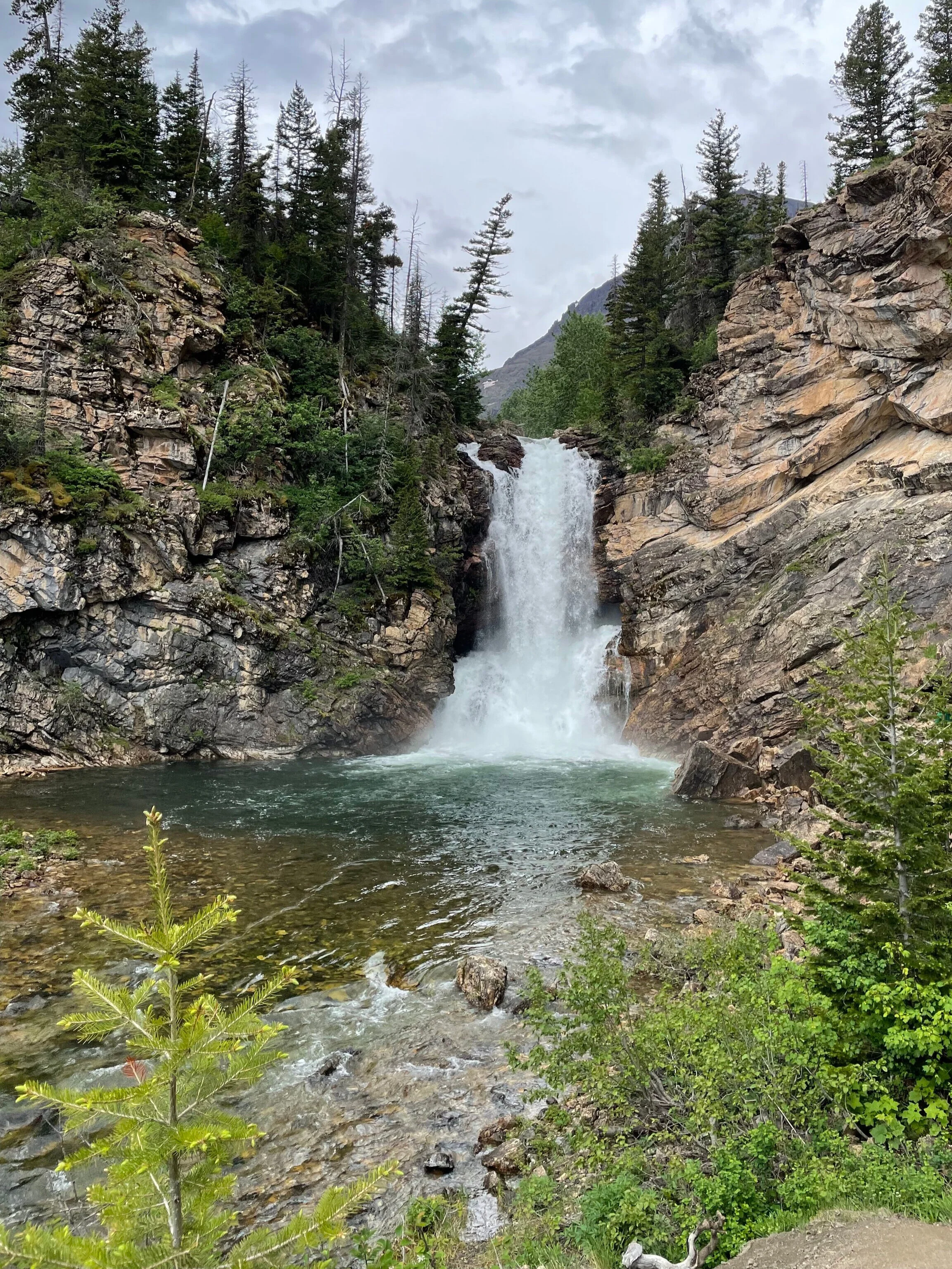
Paradise Point
0.6-mile hike. Trailhead is behind the Two Medicine boat rental office. This one feels more secluded than hikes in West Glacier. Fewer people and more quiet when you hit the point overlooking the beautiful lake and green mountains.

Going-to-the-Sun-Road
As I mentioned earlier, you will want to purchase a Going-to-the-Sun Road pass and travel this amazing road. The Glacier National Park Visitors Guide they give you at the entrance lists the highlights of this road. Be sure to look out for all of them. There are several places to stop on the road, but be prepared for tight turns, bikers and very limited parking.
When we were there, the Going-to-the-Sun-Road opened up on the last day. We were so thankful that it did! It takes special ice and snow removal crews 2-3 months to remove the snow off this road. They start plowing in April and like I said the first day it was open was June 25. Sometimes the drifts are 60 ft tall and they only remove 500 ft. per day. They take the guardrails off the road before winter so avalanches of snow don’t chuck them down the mountain. So preparing this road for travel is a huge endeavor.
Highlights include:
• Weeping Wall - lots of trickling water along the pass.
• Logan’s Pass: Lovely visitor center and trailhead for Hidden Lake hike. If you go in early summer, you’ll be hiking in the snow!
• Jackson Glacier Overlook - stop here for the best view of a glacier from the road.
• We also saw few Grizzly bears from the road traveling towards St. Mary’s. We took pictures safely out of our car.

Scenic Boat Tour
This is a perfect slow activity after a long day of hiking. Take a boat tour around Lake McDonald and hear some of the amazing history of the park. You’ll need to get tickets either online or at the boat rental behind the Lake McDonald Lodge. They have a wait list if all tickets are sold out. We did this and made it on!
Lake McDonald Lodge
The lodge a beautiful Swiss Chalet hotel in Glacier. Built in 1913, it is made of stone and wood and the archeticture is amazing. Head inside to see the huge fireplace as well as the Native American inspired chandelier.

What We Ate
This is the main franchise of grocery stores in the area. We bought bread, fruit and other sundries for lunches. Also get an ice cream cone while you are there!
I kept seeing people walking around the grocery store eating ice cream cones. I immediately thought: Where were they getting these ice cream cones from?! I want one! And then we found the source. At the front of most 1 stores near the deli is where they sell soft-serve ice cream for $1. You can also get a root beer float for $2. It just makes it feel more like a vacation if you get to eat soft-serve while you grocery shop.
Restaurants
Kalispell, MT
In a small house in Kalispell, we ate here after needing to kill some time waiting for our rental car. Known for cocktails, they have a full menu as well. Order the garlic bread appetizer. We had the huckleberry burger and chicken shawarma.
Whitefish, MT
We also ate at a few restaurants in Whitefish, MT (about 30 minutes from the park).
A great little Italian restaurant. Get a reservation if you can! Order the Tootsie Rolls - paper-thin dough stuffed with cheese and pesto. Delicious!
Great (and busy!) family-owned pizzeria. Delicious Neapolitan-style pizza with plenty of outside seating.
Where to Shop
In the Park
I found that the best shopping in the park was at the Apgar Village. There were fun little artist shops as well as a large gift shop that had a coffee shop inside. They had great selection of items.
Outside of the Park
Explore the mountain town of Whitefish and its rustic mountain architecture. There are lots of fun shops and restaurants on 2nd- 4th streets. We bought Aaron a shirt at a local t-shirt store in Whitefish that had just opened. They had lots of fun shirts that you couldn’t find anywhere else. If they don’t have your size in the store, they will ship it to you for free.
I hope this helps you when you plan your own trip to Glacier! Have an amazing time!

What's Your Process?
When artists speak to artists, a familiar question is “What’s your process?” As a writer and an artist, I love discussing all things process. The honing of craft as a creative fascinates me.
When artists speak to artists, a familiar question is “What’s your process?”
As a writer and an artist, I love discussing all things process. The honing of craft as a creative fascinates me. How does an artist reach the fruition of a painting? What are they inspired by and how does it translate in their work? How does a spark of an idea become a finished piece?
So here’s a little behind-the-scenes peek of my process when I paint a large piece:
Start with Inspiration
I absolutely without a doubt have to start with inspiration. This may seem obvious, but as an abstract painter, it’s easy to be swayed into creating a composition without tangible inspiration. Beware! Learn from my mistakes. I’ve always had a more successful painting when I had a certain idea or inspiration in mind.
Some examples of inspiration for me are:
• specific color palettes (especially when working on commissions for clients)
• outer space and galaxies
• natural materials such as rock formations, stones and slices of agate
• specific assignments/prompts (I just completed one on trees.)
Now, it doesn’t mean my pieces have to look exactly like my inspiration. (It never does.)
Use a simple sketch as an outline
When doing a large painting, (I usually paint 4x3 ft. or 5x 4 ft.) it is helpful to get the major shapes and colors on paper before I start painting. I usually just dash pastels in my sketchbook to give myself a loose outline. Here are a few of my sketches for my paintings:

They are super rough, but they basically serve as a tangible representation of the inspiration and give me the general idea of where I am going. Once I can get the images out of my head and on paper, I know that I have an idea I can paint.
Make a wash + line painting
This has been a relatively new step for me that has made all of the difference. I use a big brush with lots of water and sweep the color across the canvas. Again, this is a guide when I start to pour and use fluid painting techniques. For example, in this painting I knew I wanted the colors to be sunset colors and flow from orange to purple. The base painting gave me a guide to where the orange should stop and the purple should start.
Create the final painting
It sounds so simple, right? Now, just paint your masterpiece. This obviously might be the hardest step, but when it follows the other steps, I am much more at peace. My mind focuses on the colors and composition of the pieces and stays away from the lurking dark corners of self-doubt that tend to visit when I paint without a plan. Here’s the final painting from the first two steps I showed earlier:

But, this is the step where it can change the most. I once had a painting where I was painting it horizontally, and it just wasn’t working. I flipped it vertically and it was much more successful. Sometimes abstract painters can get away with this, but I usually try to avoid any major changes.
But I am learning to I follow my intuition instead of the plan for the plan’s sake. Fluid painting has taught me so much about intuition and control. It has helped this control freak relax and allow for great, unplanned things to happen.
So that is a little insight into my process. What is your process? Do you start with inspiration photos and sketches? Do you do a base coat when you paint? I would love to know more. Comment below.
Check out my social media to see more photos and videos of my paintings in process at @brookeharrispaints.

How to Choose Art for Your Walls
You’ve found furniture you love and a rug and curtains and maybe even some cute little plants that bring life to the room. But now here’s a question: What to do about those blank walls? The answer is ART!
You’ve found furniture you love and a rug and curtains and maybe even some cute little plants that bring life to the room. But now here’s a question: What to do about those blank walls? The answer is ART!
First and foremost, art should be personal and speak to you. When you see it, does your body have a visceral response? Can your eyes not stop starting at it in a good way? Art can be anything you love: old blueprints from a family home or vintage posters of places you’ve been or long to go. Even frame kids’ art in an important spot in your home. If you love it, then it will work in your space. This video shares three helpful tips when choosing art for your home. But it you don’t have a chance to watch, keep reading. It breaks down the three big things to think about when choosing art.
SIZE
Yep, when it comes to art, size does matter. This is the number one issue I see when I do commissioned paintings for clients. They have gigantic walls with tiny paintings on them. They say, “This just doesn’t feel right. I love this painting, but it just doesn’t work here.” Yep, it doesn’t work there.
It’s too small.
Here’s an example of what not to do:

An example of Art
that’s TOO SMALL!
This may seem super obvious but small paintings go on small walls. A piece of art should be at least half of the total wall space it is on. So let’s do some easy math, shall we? Your wall to the window trim is 90 inches. Notice I didn’t measure the entire wall, but just the space where the art was going to cover. I’m not going to put a piece of art over windows and curtains so don’t include them in your measurements.
90 inches/2 = 45 inches. Your painting should be at least 45 inches in length.
Another matter of size people are always wondering about is how high you should hang your painting. Artists and gallery experts have spent a lot of thought on this. Think about it, art is meant to be viewed. That is it’s main purpose so you want to make sure you hang it at the most optimal height for viewing on your wall.
Gallery owners say that you should hang your art 57 inches from the floor to the center of the painting. This way the main focal point of the painting will be at eye level for most and can be thoroughly enjoyed. If you’ve got some tall people in your house, you can always go up to 60 inches from the floor. Keep it in the 57-60 inch range.
Remember, when hanging art above a piece of furniture like a couch or mantle keep the bottom of the frame 6-8 inches above the furniture. Natural instinct is to go higher but then your art looks like it is floating and you have to tilt your head to really view it. Keep it eye level.
If you need a detailed guide on how to figure out the measuring and hanging specifics for your art pieces, here is a great one put out by Park West Gallery.
CONTRAST
The second thing to consider when choosing art for your space is contrast. This goes with the actual art piece and framing.
Here is an example of something that is kind of working but kind of not. It’s still a bit small for the space (only 40 inches instead of 45) and the tones of the art doesn’t really go with the dark gray on the walls.
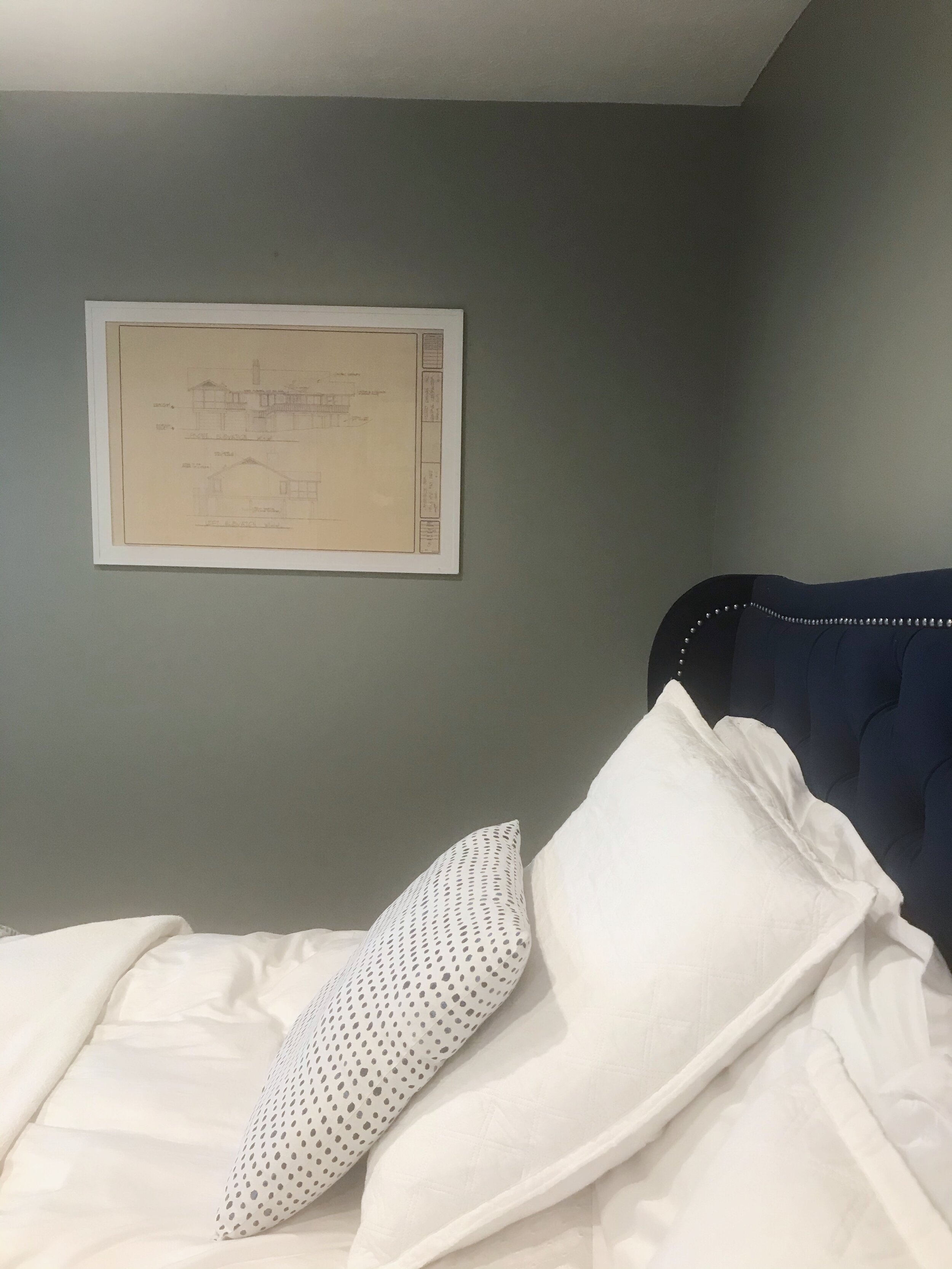
Example of Art
with not enough contrast
When thinking about contrast, take a photo of your space and turn it black and white. Does the painting stand out against your wall color or blend in? If the art and the walls are the same tonal value or the same shade of gray, that usually means there isn’t enough contrast.
So while I love this blueprint of a special family home, the tan paper and the gray walls are fighting each other. They are the same tone and just amount to blah. Up the contrast and choose something that gives some differentiation from your wall color.
The frame of this piece, on the other hand, works. The crisp white next to the dark gray walls adds crisp contrast and interest to the space. Right frame, wrong art for the space.
So as you choose art think about what color of walls it will be on. Is it dark or light? The majority of the art should be the opposite value of the wall to boost the contrast.
COLOR
The last and my favorite thing to think of when choosing art for a space is color!
While you don’t want the art to be matchy-matchy in your space, finding art that includes the colors in your room can really bring cohesion in a disparate space.
Take this painting for example:

I painted this one custom for the space because I really wanted these specific colors in my bedroom. Notice how I pulled in the gray from the wall color and the blues from the bed and curtains. It also checks the boxes for size (48 inches on a 90 inch wall) and contrast (it has plenty of white and light colors to balance the dark gray walls.)
It is more than okay (preferred actually) if a painting brings in other colors that aren’t found in the room. This room doesn’t have any coral (no yet anyway) or gold but adding them in to the painting bring balance and also variety to the space. Now, not everything is blue or gray. The coral is a nice compliment to the blue and makes it pop.

So when choosing art for your home think of three main things: size, contrast and color. Have fun and move your art around. You might be surprised that some pieces fit better in other spaces and you will fall in love with them all over again.
If you would like to know more about painting commissions, I’m your girl. I love to create personal and thoughtful pieces that reflect your personality. Please visit my website at brookeerinharris.com/commissions for more information.
Happy art choosing!
How To Style a Tray
I’ve been getting into lots of decorative styling lately. Like many of us, it’s probably because I’ve been spending a lot of time at home.
These past few months have made me realize how important it is that we love the place we live. Our home should energize us and calm us. It should give us joy. Here’s a few ways I’ve been finding little joys these past few weeks – styling up special items in my house because the laundry can wait. This is more fun!
Think Layers
When you first choose an item to style like a tray, think what of all the different purposes you can do with it. You want to see the tray as another plane for dimension (No, I’m not talking time/space travel here.) Instead of placing items directly on a table, use a tray as another interesting layer. For example, think about a flat bare table. You place a vase of flowers on it and it looks okay, but something is missing. Next, you place a linen striped runner on the table with the flowers. Now, we are talking. It adds layers and visual interest. A tray does just that. It is another layer that adds visual interest to places in your home that are vast, flat planes that need to be broken up with something exciting.
Think Vertical
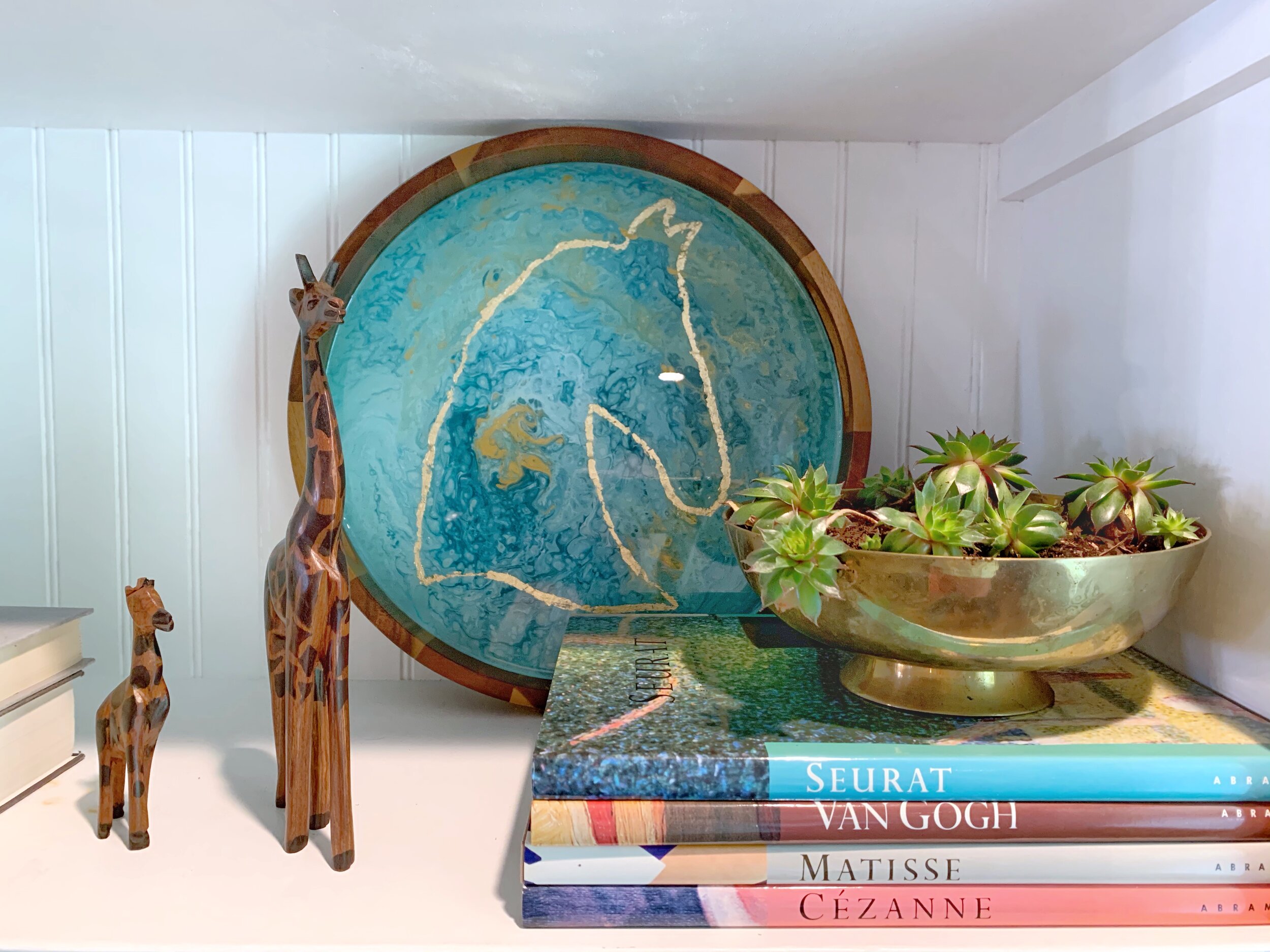
Scale wise, trays are a perfect bookshelf item when turned on their side. They make a great vertical backdrop for your books and treasures. It adds height and weight to an otherwise empty space and gives good visual heft to your styling. Many of our decorative items are smaller and don’t take up much physical presence. They need something to ground them.

Special Piece for Special Items
I love creating thoughtful vignettes with special items in my home. Take this tray, for example:

I could have put this bourbon and barware on a regular wooden tray, but the custom color and gold leaf horse head make this one so much more special. It is a nod to our home’s color scheme (blues and greens) and also where we live. (Lexington, KY is the horse capital of the world.) It also emphasizes the specialness of the pieces on it – a one-of-a-kind tray for special treasurers. The bourbon was purchased on a tour of Willett distillery and the glasses were passed down from my husband’s grandparents.
Just keep in mind that treasured items should be displayed with intentionality. Then your home reflects you and your individuality, not just the latest home decor line at Target. (Don’t get me wrong, I love a good Target home decor find. I just don’t want my whole house to look like Target lives there.) I live here. Brooke and Aaron live here. We love unique things and to travel. We love collecting family heirlooms. We want each decor item in our home to be something we love that comes with a memory.
You can also be the one who passes on treasured items as wedding gifts or for special occasions like this lovely bed and breakfast tray.

Styling Dos
Just some styling rules regarding your tray:
Think in threes, or odd numbers. I don’t know who decided this but odd numbers of items do look more visually appealing than a group of even numbered. Three items on a tray feels much more balanced than two. Stick to three or five items on a tray. Don’t go overboard filling it up.
Think about scale. You want items of various heights and levels to add visual interest so your eye doesn’t land in one spot and stop.
Think about texture. You’ll want to vary it up again for…let’s say it together…visual interest. That’s the word of the day. Leafy plants, smooth glass, and linen covered books all make your special displays more thoughtful and textural.
Add life. Again, bringing things that are alive into your decorating such as plants, cut flowers and fruit bring your home to life. Live stuff makes things look alive. Imagine that? That’s why you should bring them into your decorating, to breathe life into your home.
If you want to learn more about the custom trays photographed here, please visit my website. I love creating custom trays for people and their homes that match their unique color scheme and personalities.

Our Debt-Free Journey!

We paid off $82,000 in 32 months making $60 to $80,000 a year.
That is an impossibly shocking statement. The shocking part is that it’s true.
A journey started
I remember how this journey started, the first time my husband, Aaron and I sat down to work out our budget. Our second daughter had just been born and I was staying mostly at home looking after two small children. Aaron was working full-time as a nurse and going to school part time to become a nurse practitioner. Very busy! I was at home most of the time so handling the day-to-day finances was something I could take over for our family, something Aaron didn’t have to do by himself anymore. It would be a small load off while he focused on work and school.
We sat down at our large wooden table with the laptop. I had already started to make a budget on excel, neat little boxes for our grocery budget and utility bills. Aaron had showed me all the log ons to pay our bills automatically online. Basically, I didn’t know any of this stuff before this.
I didn’t really know what was going on with our money. I knew we had enough to cover our bills, but that’s about it. And let me just say this is entirely my fault. Aaron was completely open and honest, I just chose to ignore. Early on in our marriage I would say, “I hate money. I’ll just make it and you figure out what to do with it.” Because of this, every two to three months, I would have a panic attack. The anxiety would spill out it so many questions: “Do we have enough money? How much do we have? Why do I feel this way with money?”
Because I didn’t know what in the world was going on with our finances. That’s why.
I look back at that and think, “Wow, how naive!” Good thing my husband is kind and trustworthy.
On so many levels this is unwise, but mainly it was very unfair to my husband to have the financial burden solely on him. We should have been looking after our finances as a team.
At first, I was optimistic about where our finances were. We had even talked about taking a trip to Montana for our 10th anniversary. I clicked over on the excel spreadsheet and moved the cursor to the debt portion of our budget: truck payment and student loans. We clicked through to the truck payment loan with 5/3 Bank.
The beautiful dark green Ford F-150 rolled into our driveway three years ago.

On the account, I saw the small black numbers of the remaining balance: $18,000. What? We still had 18,000 on the loan we had been paying for for three years?! And why do we have a loan with a bank that is named with an improper fraction? That doesn’t seem good! My thoughts swirled. I blinked hard and felt a large lump in my chest, like when you accidentally swallow a piece of ice and the chunk slowly and painfully moves down your throat.
I was in hyperventilation mode. I felt the same familiar anxiety attack coming on strong.
Then we moved to the student loan account. I knew this was going to be a big one. I braced myself and took a deep breath before looking at the amount. A big $60,000 stared back at me. It was the first time I had ever seen the number concretely. Before they were just abstract objects, lines and zeros I pulled in and out of time and space. At first, the student loan debt seemed so far in the future. When you are 22, you think, “We’ll pay that when we are older and making more money.” You imagine your 32-year-old self working a six-figure job wearing a black power suit. Well, we were definitely older, but not making lots of money, good money, but not lots. And no one was wearing a power suit.
I was angry.
I was so pissed. My 32-year old self hated by 21-year old self for being so unwise. I was furious at our lackadaisical attitude that “everyone has debt”; “you’ll always be in debt”. It’s part of the American way of life, right? It never even occurred to me you could live your life without it. And guess what you have when you don’t have debt? Money!
Debt steals your future.
That is what I realized that day and was most angry about. You see, we were under the thinking that if you have $350 dollars in your monthly budget then you could afford a car loan. And technically you can. We paid the payments on time every month. But in all of these payments, we weren’t paying ourselves. We had no money left over at the end of the month for future dreams we had. There would be no trips to Montana for our 10th anniversary. There would be loan payments. Lots and lots of loan payments. And for how long? The next decade?
With debt, we would never get to be generous because we were constantly paying back what we had already spent. I longed for the time when we could be generous with our money - give to people in need, even maybe buy a car for a single mom some time, help pay for a child’s adoption. But none of that could happen with monthly payments, because there is no money left at the end of the month.
It was all just so frustrating.
While I was fuming about our squashed future, I looked over at my husband. His head was down, avoiding eye contact. His usually large upper body pulled in tight as if he were trying to roll himself up and disappear.
I felt anger looking at those big, awful numbers, but Aaron felt shame.
He was the one who wanted a $40,000 truck. He was the one with the student loans, $30,000 of which was for the broken dream of medical school.
The crazy, amazing, Holy Spirit thing of it all was that I was never mad at my husband. Oh, don’t get me wrong, I get mad at him sometimes and we definitely didn’t see eye to eye on all of this debt-free journey. But I never blamed him or resented him for this debt. We humans tend to point the blame finger. “It’s his debt! He needs to take care of it!” Nope, I signed on to this too. I agreed to this. We made these decisions together. I was just as responsible as he was. We would get out from under all this debt together too.
Right there in the dining room of our home, I refused to let debt steal any more of our future.
But Aaron was a little harder to convince...
Not Quite on the Same Page
Aaron felt that shame so strongly that he couldn’t quite understand how we were ever going to clean the mess up. Maybe you are there too. In his mind, the pile of mistakes and poor decisions needed a punishment. He thought it would be ten years before we would ever be free. How could we pay more when everything was already so tight already?
We didn’t always agree about this journey. The first 3 months after that initial sit down we had more fights about money than we had in our entire 10 years of marriage. Many would end up with me feeling anger while Aaron experienced quiet sadness and shame.
But we were waking up to our mistakes.
Like many things in our marriage, we viewed it from opposite sides of the room. He and his ideas in one corner and my complete opposite viewpoints in another. But, we walked to the middle in compromise. We came together in agreement.
I wanted the debt gone yesterday and Aaron truly believed at the start of this we would be in debt for a decade. “Well, let’s just start and see what happens,” I said.
The Plan
It is amazing when you make a budget. It’s like giving yourself a raise. In the past, it felt like money slipped through our fingers. Where did it all go?
We trimmed our budget down to nothing. Aaron picked up extra overtime. As soon as we decided to get out of debt, a bunch of online courses opened up for me to teach. (Coincidence, I think not.)
We had guidance from Dave Ramsey and his team. You should definitely check him out if you are looking to get out of debt. His baby steps organize it in a way that is clear and practical.
Basically, we earned money and didn’t spend it. Our multiple out to eat meals per week stopped. I didn’t peruse the Target aisle. Aaron stopped buying things at Lowe’s.
Seeing the Hope
With the little savings we had, a scholarship Aaron received and with all the extra money we earned and didn’t spend, we paid off the truck in 7 months.
$18,000 in 7 months.
How was this possible? We realized by paying off the truck, if you are intentional with your money and know where every dollar is going, its like you gave yourself a raise. Money would fly out of the bank account and we wondered where it went. Not any more.
Paying off the truck let hope arise. We could see it. We could feel this plan working. We knew God was in this. He was changing our hearts and minds while helping us with this freedom.
Seeing that hope really propelled us forward. It broke down the lies that had we listened to from ourselves and the enemy. Our fixed mindset slowly turned into a growth mindset as the debt started to roll away.
The First $30,000 of the Student Loans
Out of the entire journey, this chunk of money was the hardest. It was that last lingering vestige of doubt and shame. This $30,000 was from a failed year of Medical School for Aaron. It was a death of a dream. He knew nothing other than being a doctor and when it didn’t work out it sent him into a depression I had never seen in him before. But the Lord is good. Little by little, Aaron found his calling in nursing. No experience was wasted. God revealed to him that his true purpose and identity didn’t belong in what he did.
Aaron is now a bad a** in a Cardiac ICU and is a specialist for a life support system called ECMO. He absolutely excels at it and loves it. But the debt remained. All other aspects of this situation had been healed except the blasted money.
Emotionally, this debt felt different than the truck. It was battling that death of a dream again. It took quiet determination to conquer this debt. It was hard, but in 2018 we paid of the $30,000 medical school loan. Aaron was finally free spiritually, physically and financially from that burden.
Find a Support System
We knew when we paid off the first $30,000 of the student loans, we could pay of the rest. 2019 was our last year of debt!
I won’t say it was easy. There were times when the money didn’t come in quickly, where we felt stuck. But there were amazing blessings as well. Many of those blessings came in the amazing support of our parents, family and friends. Both sets of parents graciously babysat grandchildren while we were working. They bought consignment sale clothes and toys for us. In their own ways, our family was a huge support to this journey.
Another huge blessing was a gift from Aaron’s grandparents. I had gone down with the girls over Fall Break for a visit to their home in Tupelo, MS. They knew about our debt-free journey. Each time we spoke with them, they encouraged us and asked how it was going.
During this visit, I sat in the warm kitchen encircled by the bay window. Gramma shared a bowl of chips and guacamole with me for an afternoon snack.
“I just wanted to say how proud we are of you both of you for tackling this debt,” she started.
“Thank you,” I said, munching on a chip.
“Grampa and I want to give you money.”
“Oh no,” I argued. “I can’t take your money.”
Gramma stopped me. “We want to be a part of what you are doing.”
Grandpa chimed in, “We want to see our legacy when we are alive.”
Tears welled in my eyes. I was so thankful, so grateful, not only for the money but to be seen, to be acknowledged and understood.
That money made it possible for us to finish paying the debt in 2019.

How We Did It:
You are probably wondering, “How did you actually do it?” How do you pay $82K when you thought there was no extra money. Here are a few practical ways that we earned and saved money to apply to our debt:
Be Intentional
Every dollar has a purpose. We used the free app, Every Dollar. It was so helpful to be able to track the budget together in one place digitally. We could check it on our phones wherever we were and add transactions immediately.
Be Creative
We put a little more than $10,000 towards our debt from scholarships. Aaron is in a doctoral program that his work is paying for, but there are living expenses and merit scholarships out there that don’t have to be directly applied to tuition. We never would have found these if we hadn’t decided to get out of debt fast.
Be A Smart Shopper
We switched which grocery store we shopped at. Any Aldi fans out there? By buying most of our groceries at Aldi every week, we saved 30%.
Hands down, this was one of the biggest things that saved us money. I could write a whole blog post about how to save money on your grocery bill, but a big way is to shop somewhere else.
Say Yes
We didn’t have the luxury of picking and choosing work we did. We just said yes. Say yes to any legal thing that makes you money. Overtime, call time, teaching extra courses, teaching private lessons, yard sales, and Facebook marketplacing items were all ways we made extra cash.
Say No
Say no to extra stuff that is not in your budget. For us, this meant eating out, expensive date nights, expensive kid activities, shopping trips, new stuff for our house, home updates, etc.
We did a few of these, but we always felt like we had to say yes to everything before. We saved a lot of money by saying no.
Motivate Yourself
There are lots of ways to keep your motivation going. You know yourself better than anyone so choose things that work for you. Here is some of what we did:
Make a sign. This may seem trivial, but put up some sort of visual marker of your progress where you can see it regularly. We had a little chart of 64 boxes on it, each one marking $1000 of our student loan debt. Getting able to check off a box when we had reached that $1,000 was very satisfying and helped us see our progress clearly.

Have some fun with your journey. We marked out milestones with certain smaller projects we did for the house. Those little $200 gifts were like tiny little breadcrumbs showing us how far we had come. For example, we got a new bathroom faucet for our master bathroom vanity when we hit $10,000. At $40,000 we got a new TV on sale for our basement.
Celebrate at the End! The last and final motivation for that last $10,000 was a trip away together. My husband’s family owns a house in South Carolina. I knew it would motivate us if we could arrange to go there at the end of the year, just the two of us, if we paid all of our debt off.

You Can Do This Too!
There is something thrilling about working together on something big. It connected Aaron and I in deep ways.
You might be thinking you can’t do this. “It worked for them, but I’ve got XYZ in my way.” I’m here to tell you that the impossible is possible. I share this story so that you know you can do it too. Wherever you are at start digging! Fight, work and claw your way out. YOU CAN DO THIS.
This is a journey that changed me. It changed my marriage and my family. Really, it’s changed the trajectory of our future and the legacy we will leave to future generations.
Now with the debt gone, I feel completely different. I have empty spaces in my mind where I can dream and think again that were clogged with worry and frustration. Right now, we are saving up our 3-6 months emergency fund. After that, Aaron and I are excited to have the freedom to dream of our future together. At some point we will definitely go to Montana!
Until Next Time,
Brooke
Pouring it Out

As I write this, I am staring at this painting hanging on my bedroom wall. It is hung right beside my side of the bed. Each day it reminds me of the good work God is doing in our world...let me explain.
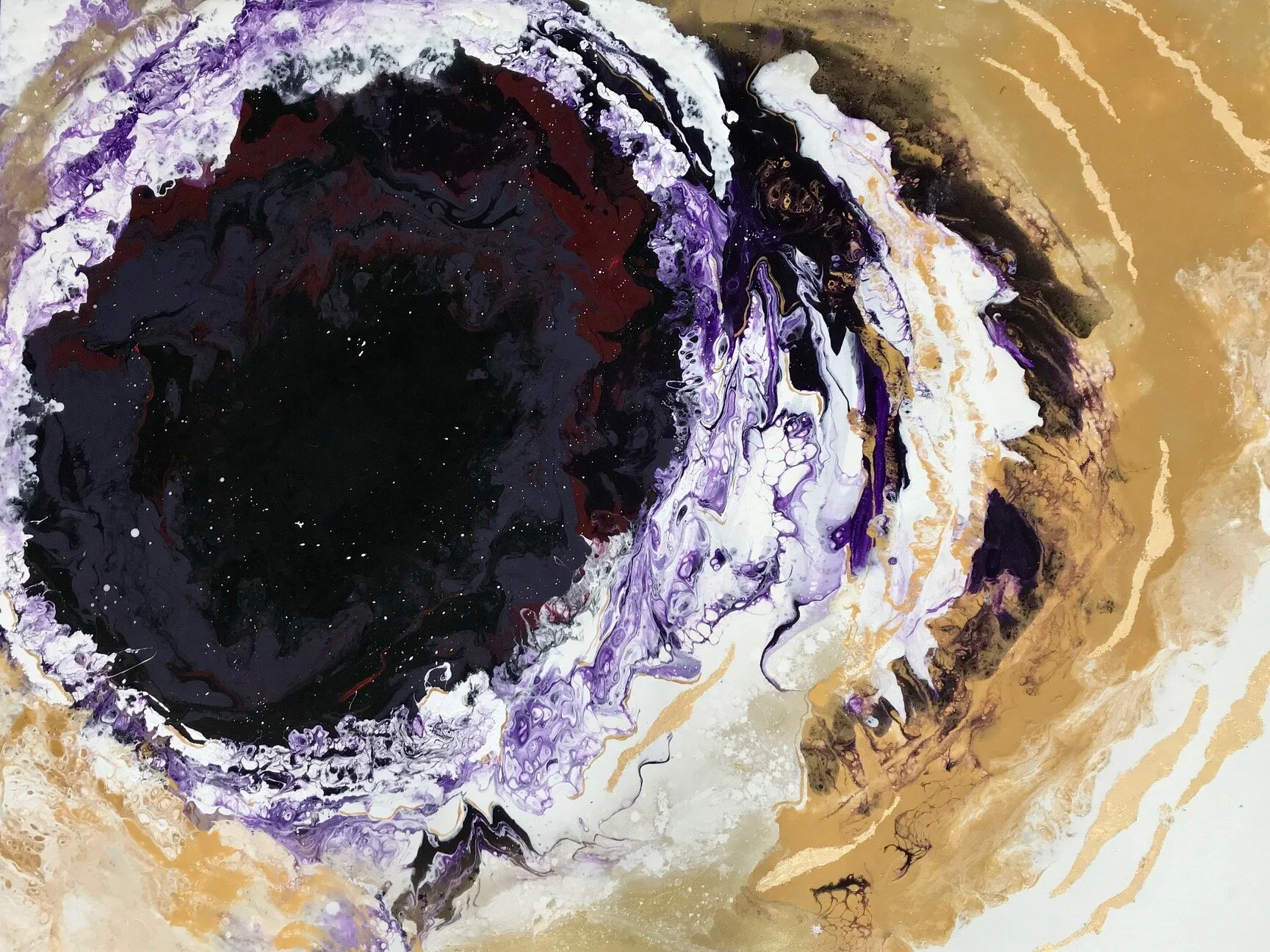
It definitely looks like outer space or some sort of celestial form, but I painted this during a worship and intercessory prayer session for my sister. She and her husband were going through a dark time to no fault of their own and they needed the truth to be revealed. We needed Jesus to conquer the darkness that was attacking their family. I kept hearing the words, “He makes the darkness tremble.” And then I realized, I’ve got to declare that statement in existence with prayer and worship. Then a lightning bolt idea came: “I’m going to paint that!”
I began to map out the painting. Once I had the concept in mind, everything flowed (literally and mentally) from there. Here are a few things I knew I needed in the painting to truly convey its meaning:
I wanted the darkness to be ugly.
Of course, the darkness needed to be black, but I also chose a muted purple gray color too. Christian tradition uses the color purple to symbolize the royalty of Jesus. The enemy takes the truth and the divinity of Jesus twists it. The purple gray color mimics Jesus royalty, but it pales in comparison to the true version.
I also added in red. As I was mixing paint, I kept feeling the need to add crimson. Sacrifice to conquer the darkness is absolutely necessary. Christ’s sacrifice conquered the darkness and his blood remains there as proof. It is forever part of the equation. “But if we walk in the light, as he is in the light, we have fellowship with one another, and the blood of Jesus, his Son, purifies us from all sin.” (1 John 1:17, NIV.)
I wanted Jesus to be beautiful.
I chose white paint, royal purple and gold...lots of gold. I wanted a stark contrast between the darkness and Jesus. “Your eyes will see the King in His beauty…” (Isaiah 33:17, NIV).
I wanted Jesus to be bigger than the darkness.
In the painting, Jesus and his nature is physically swallowing up the darkness. The darkness look pretty bad, a large black hole and an abyss to nowhere, but even with that, it’s not the main focus of the painting. It is situated towards the left side and the gold, white and purple swallow it up and take over. The beautiful colors pour infinitely off the canvas, but the darkness has finite boundaries.
“Who is this who comes from Edom, with garments of glowing colors from Bozrah, this One who is majestic in his apparel, marching in the greatness of his strength? ‘It is I who speak in righteousness, mighty to save.’" (Isaiah 63:1, NIV).
I wanted the purity of Jesus to remain.
If you look closely, the white and purple do not mix with the black. I wanted Jesus to conquer that darkness and not a speck of evil can infiltrate him. I layered the white and purple over the black after it dried as to not swirl and mix the paint together.
Now onto the miraculous side of this painting and why intercessory prayer is so important:
I first poured out that ugly cup of black and gray paint and pleaded with Jesus. I cried out to him and longed for resolution for my family. Odds were against them; the situation seemed hopeless. I shook the canvas to throw the paint off-kilter. It quaked against the taut canvas.
With the resonant notes of the song “Treble” in my ears, I began to mix the paint to represent Christ.
Jesus, Jesus, You make the darkness tremble
Jesus, Jesus, You silence fear
I poured pure white on one corner of the canvas, pure gold on the other. I connected them with purple and white paint, blending them together in a sweeping arch.

Your name is a light that the shadows can't deny
Your name cannot be overcome
Your name is alive forever lifted high
Your name cannot be overcome
I moved closer and closer to the darkness on the left side of the canvas with the gold and white paint, slowly surrounding it and swallowing it whole, praying all the way through for truth, resolution and justice for the innocent.
Jesus, Jesus, You make the darkness tremble
Jesus, Jesus, You silence fear

And just at this moment of connection, when the paint to represent Jesus conquered the ugliness of the black paint, a text came in from my brother-in-law. “All has been resolved!”
Jesus defeated the darkness and brought truth to my family that day. As I painted in the physical world, He was working in the spiritual to make things right. While I was painting in the physical world, He was conquering the darkness of the spiritual one!
So this painting is more than just pigment and canvas. To my sister, Lauren, it’s a testimony of God’s goodness and faithfulness in her life and in our entire family’s life. I gave a bigger version of the one I painted to her for Christmas this year. It’s hung in her bedroom too, a constant reminder of how Jesus makes the darkness tremble.

Thanks for letting me share my process and what’s going on in my spiritual life too.
If you have a personal experience you would like to portray through paint, let me know. I love painting how the physical and spiritual worlds collide. We can work on your story together for your own personal piece.
Until next time,
Brooke